The Perez Driveway
Nothing sits on dirt.
A driveway is only as good as what is under it: the ground dug out, the base laid and compacted in lifts, and the surface set on that. This page follows the job stage by stage, from the old concrete to the finished edge.
- Where
- Cranston, RI
- Scope
- Driveway and front steps
- Status
- Complete
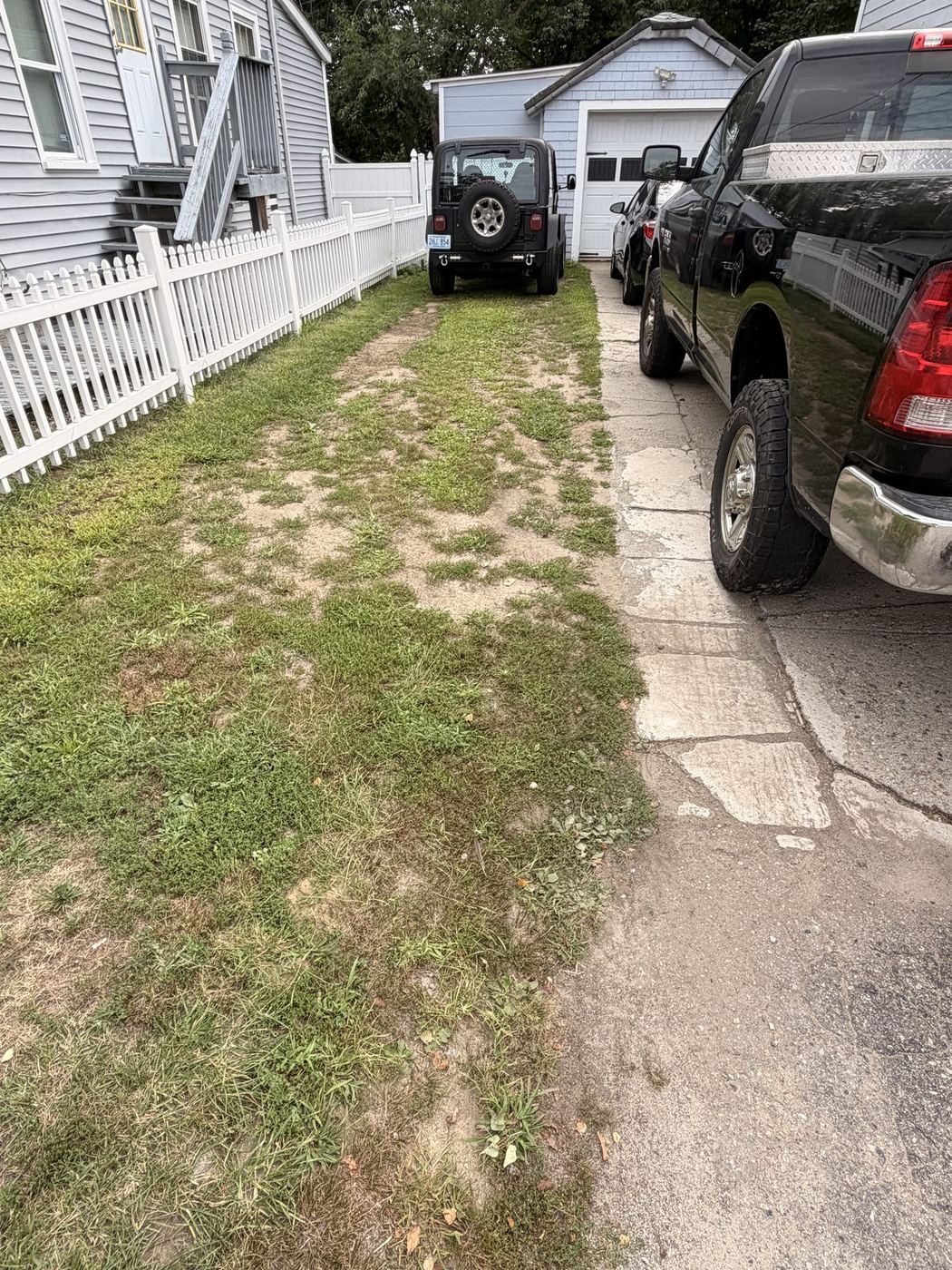
Concrete slabs laid end to end, heaved and split along every joint, with grass growing up through the cracks and a strip of bare ground beside it where the cars actually parked.
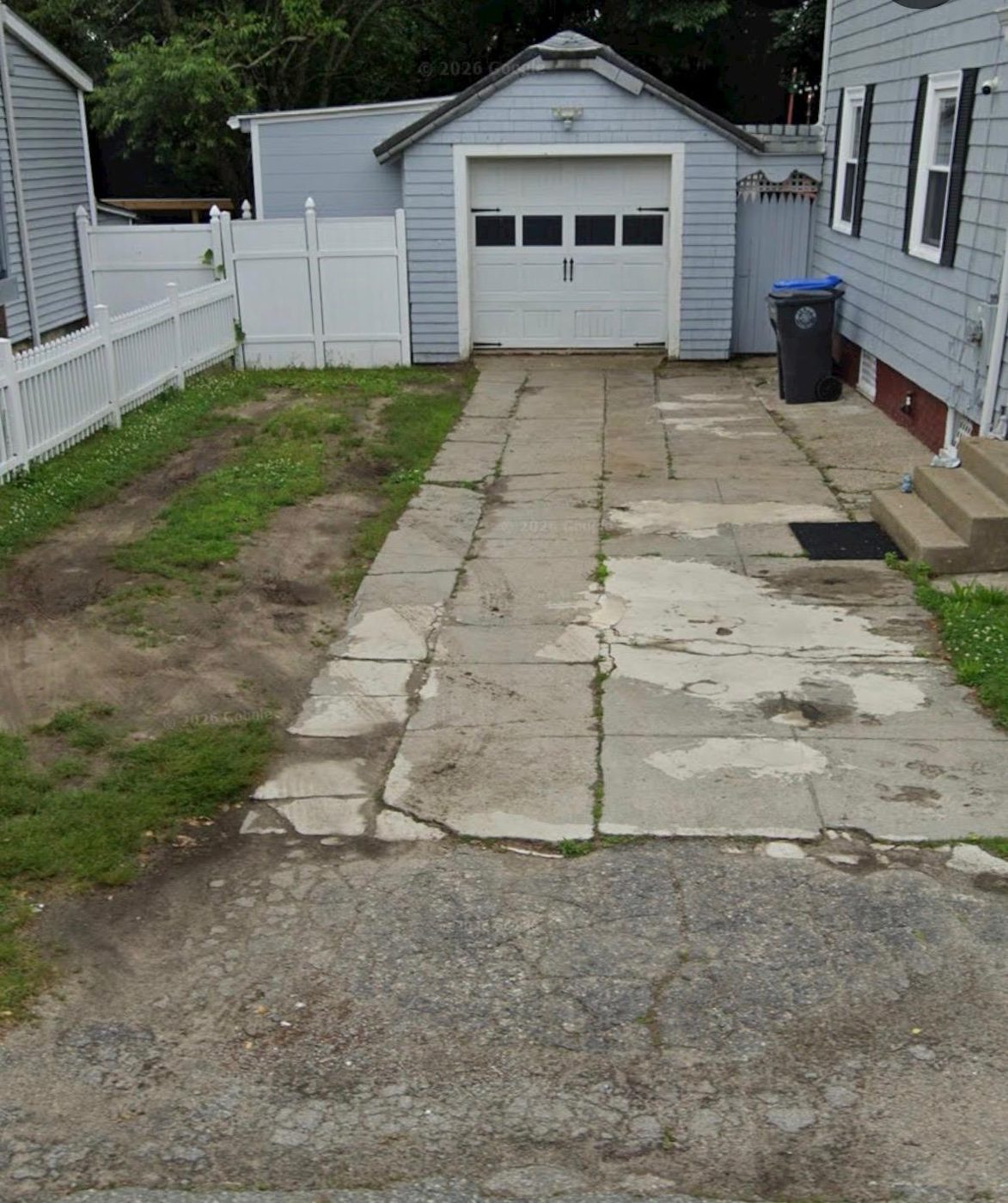
Before image © Google Street View.
The new line is sprayed on the ground before a shovel goes in: across the lawn beside the old driveway, and down to where it meets the street at the curb. Everything that follows is built to that line.
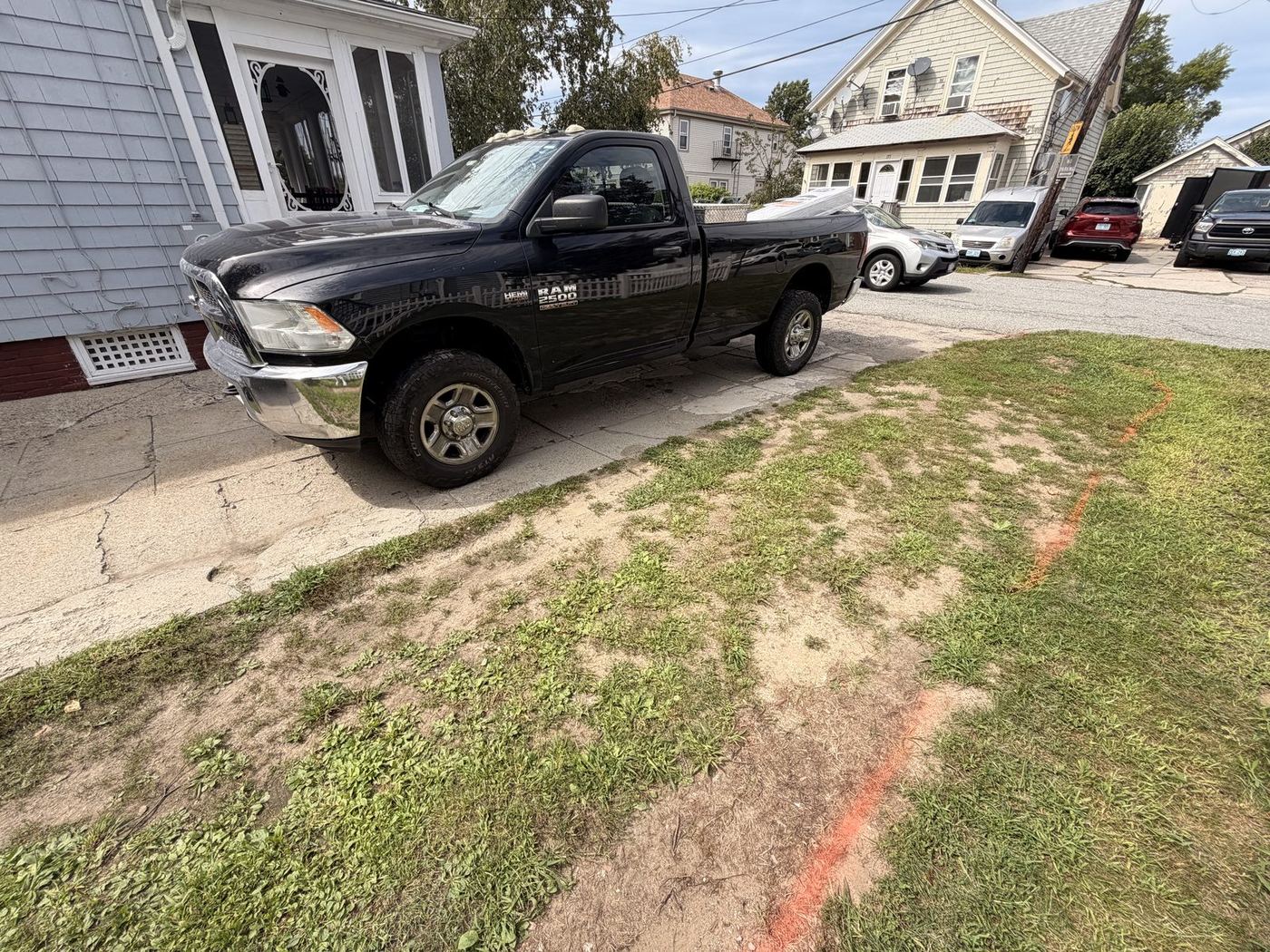
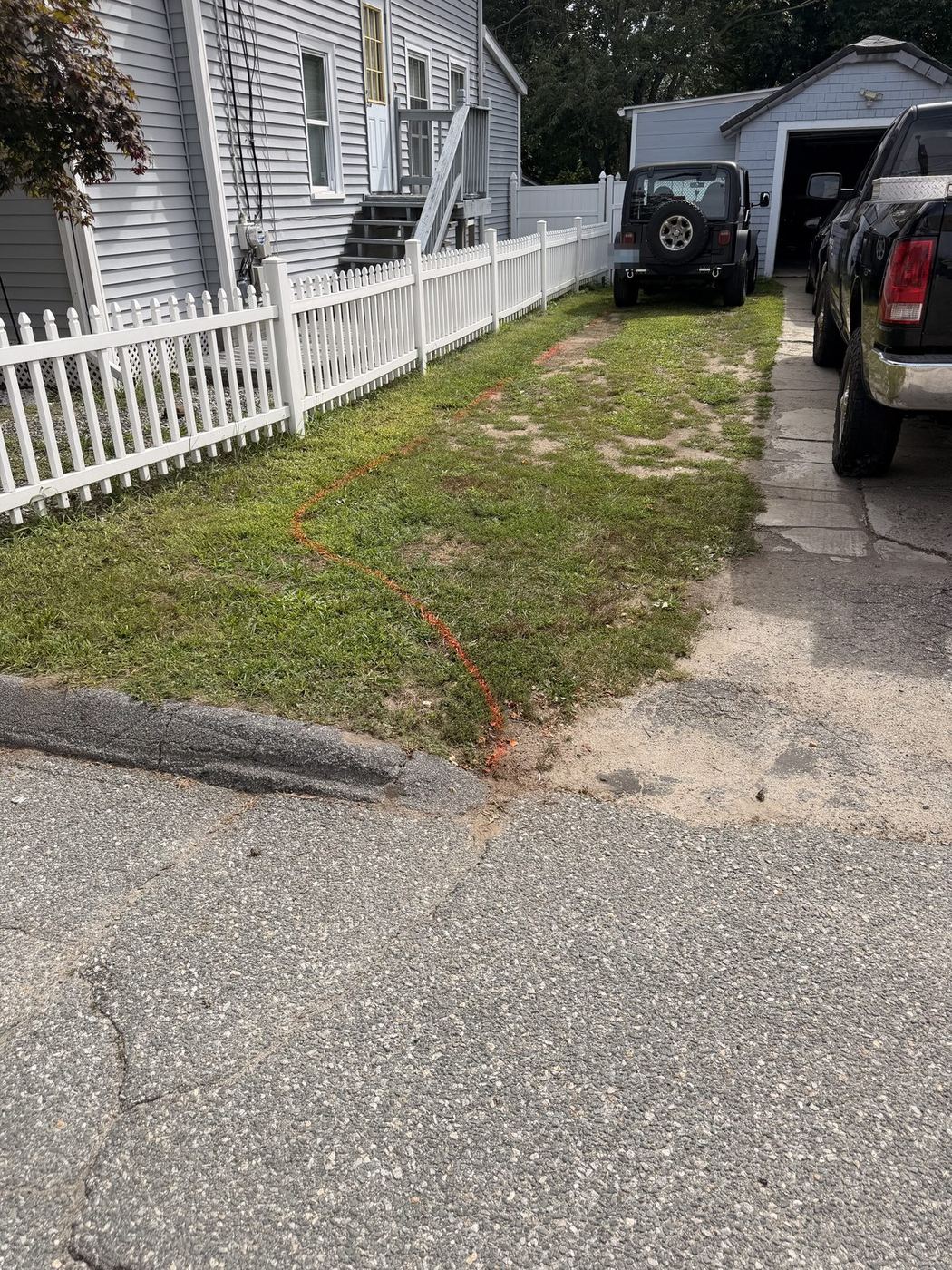
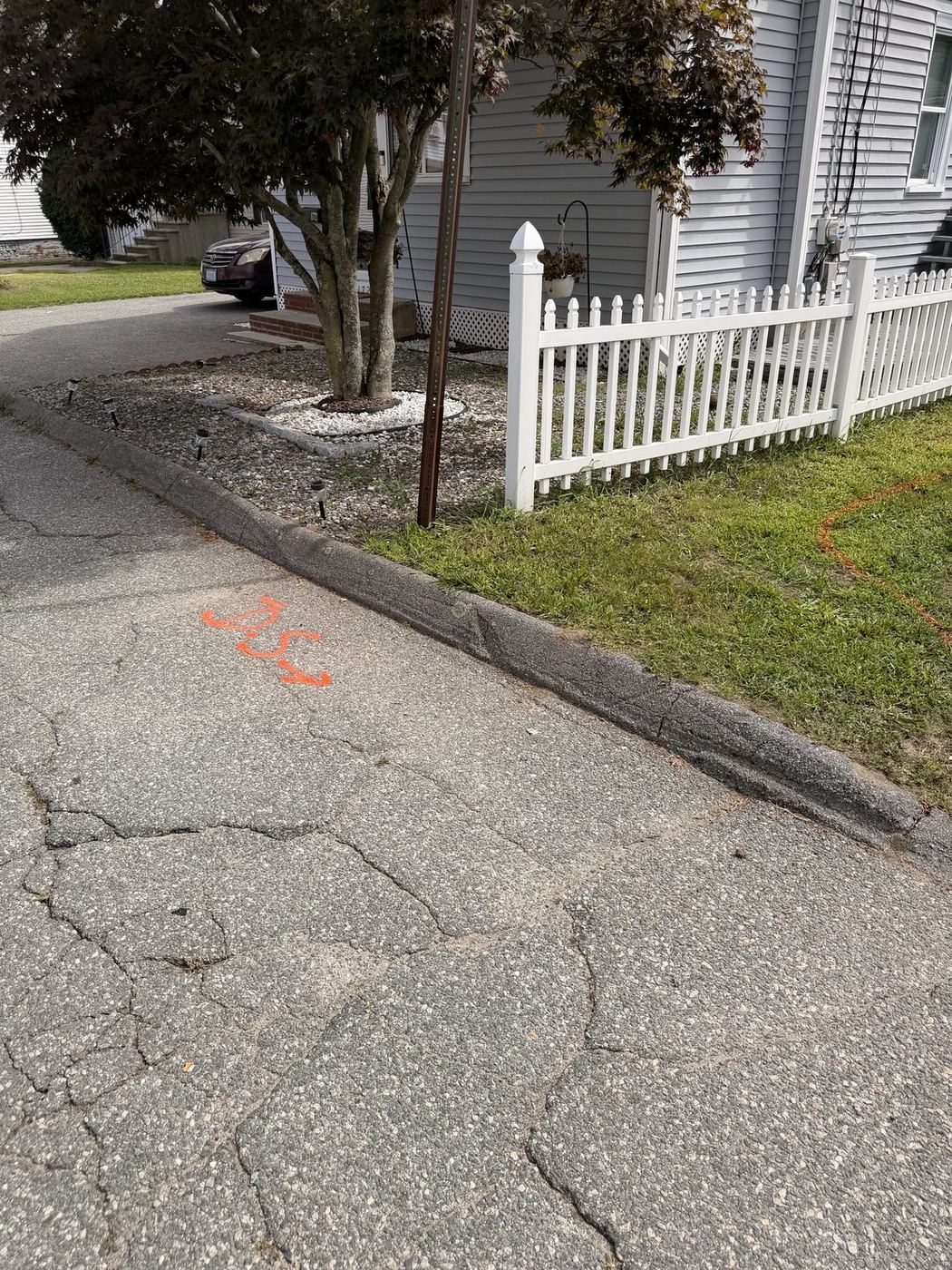
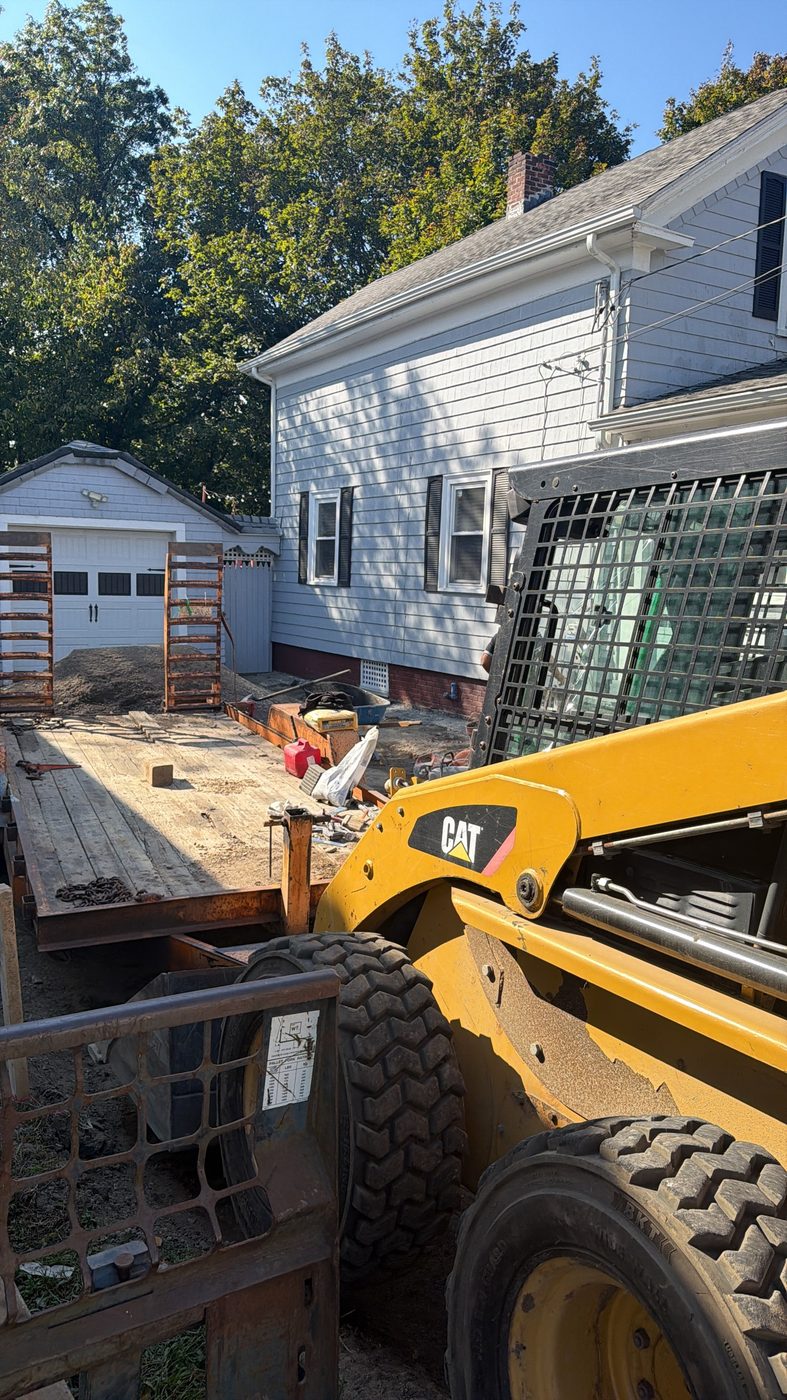
The old slabs and the cracked apron come up and leave on the trailer. Then the ground is dug out past the old base, cut to the lines and graded, so what goes back in is built on something that will not move.
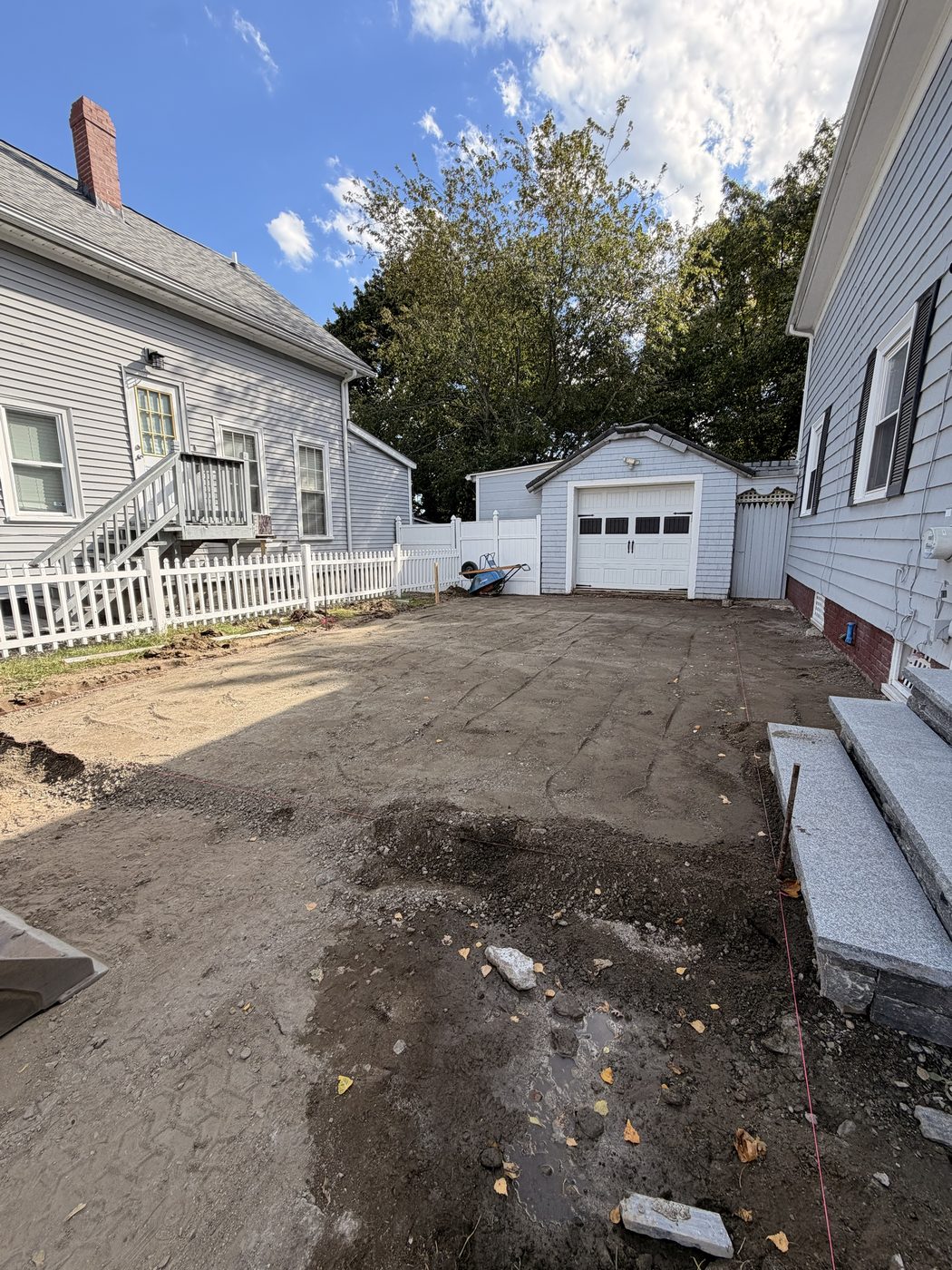
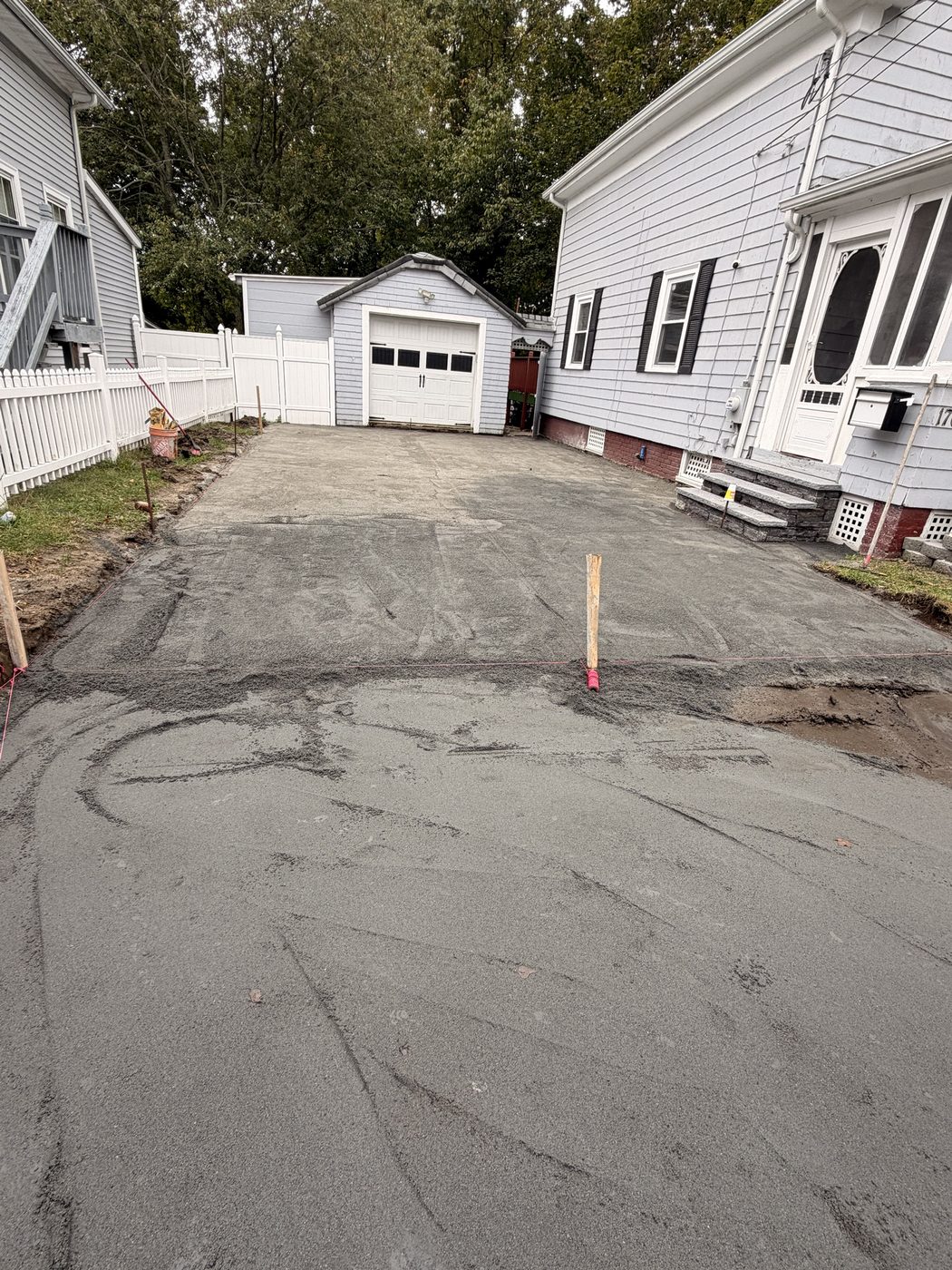
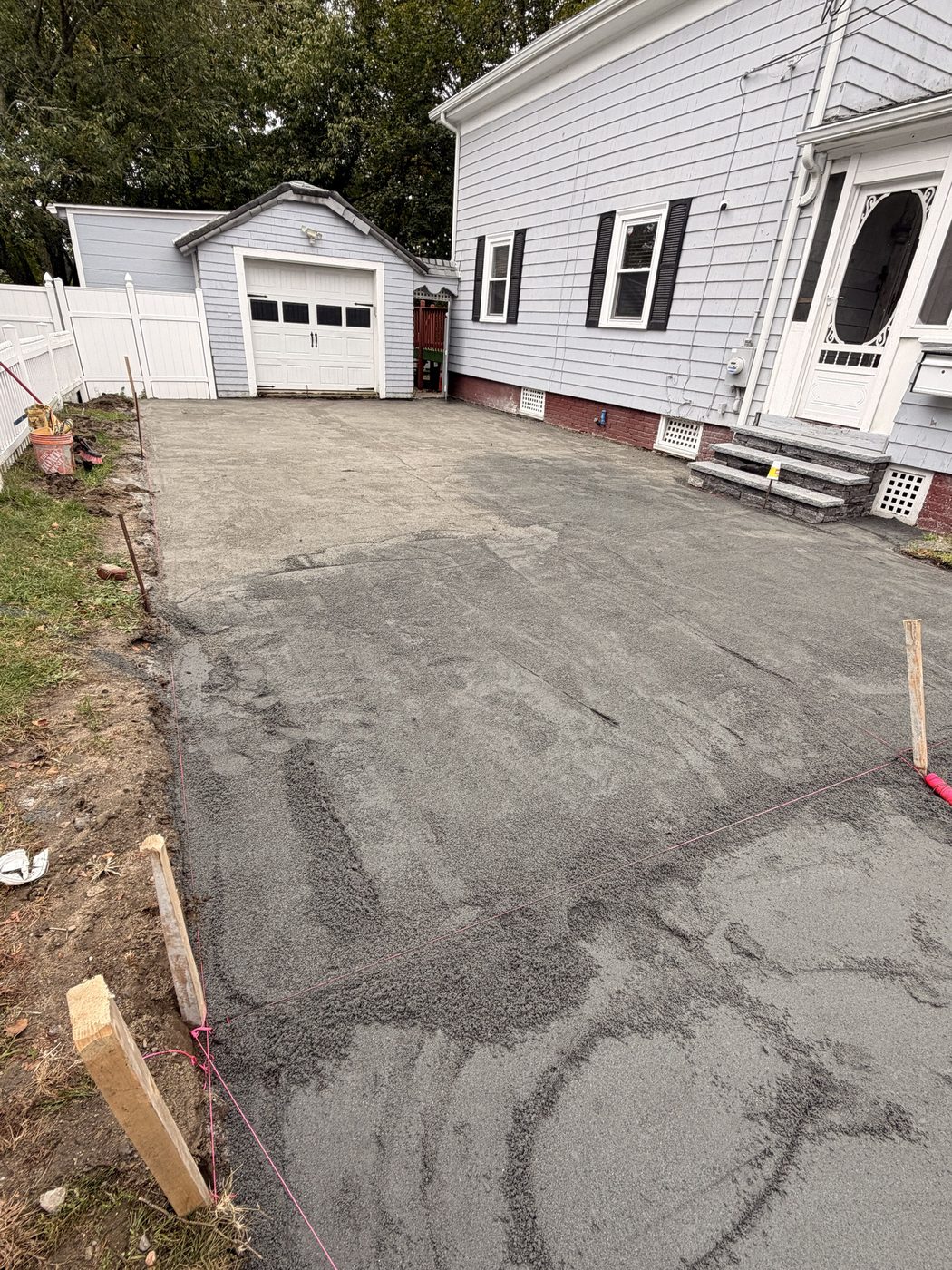
Gravel brought in and compacted in lifts, then the bedding course screeded flat under the string lines. Every line on the finished surface is decided here: the pitch away from the house, the edge along the fence, the level at the garage door.
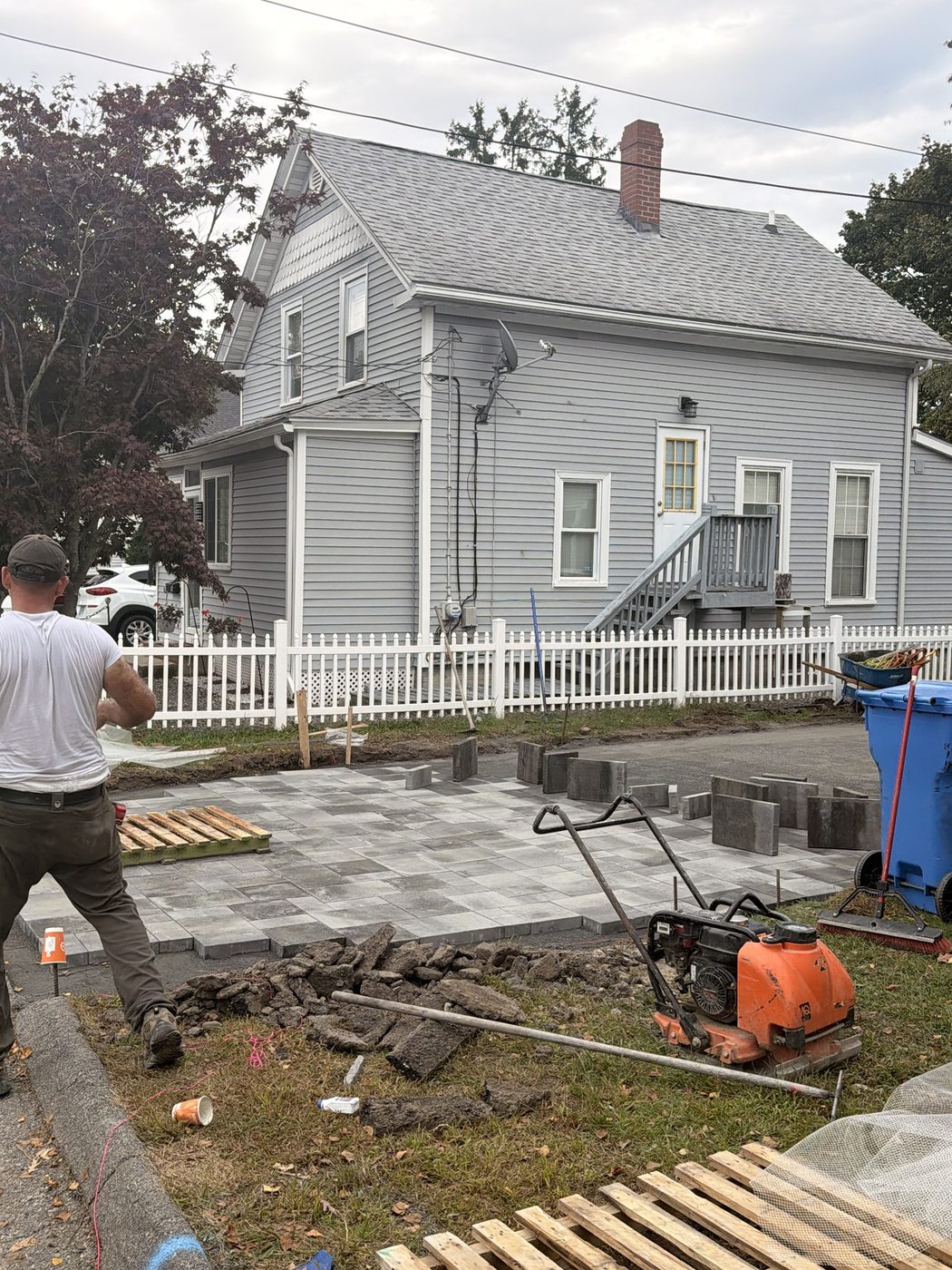
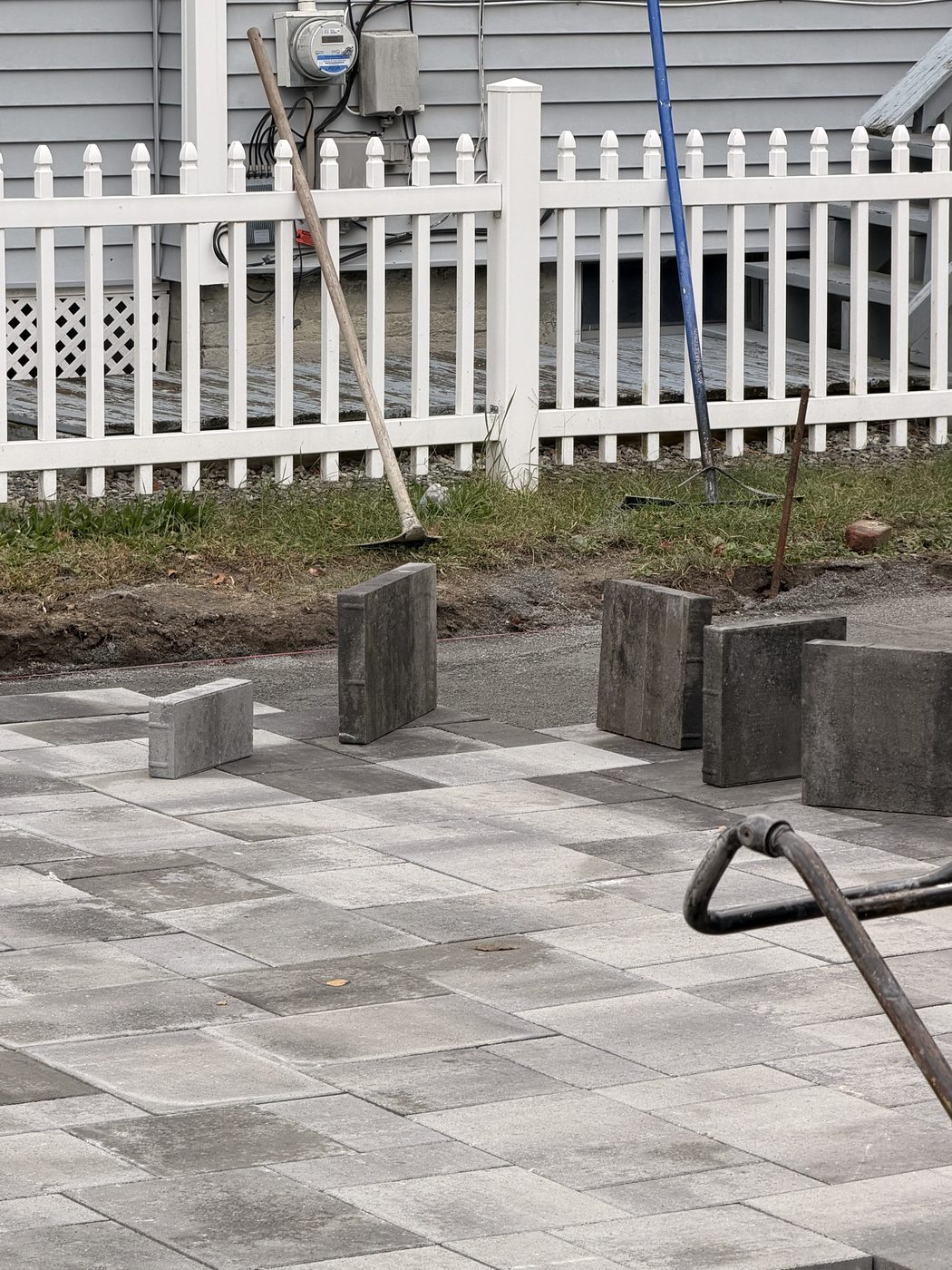
The pavers go down in a random pattern of mixed sizes, set tight from the house out. The plate compactor follows, seating each section into the bedding course.
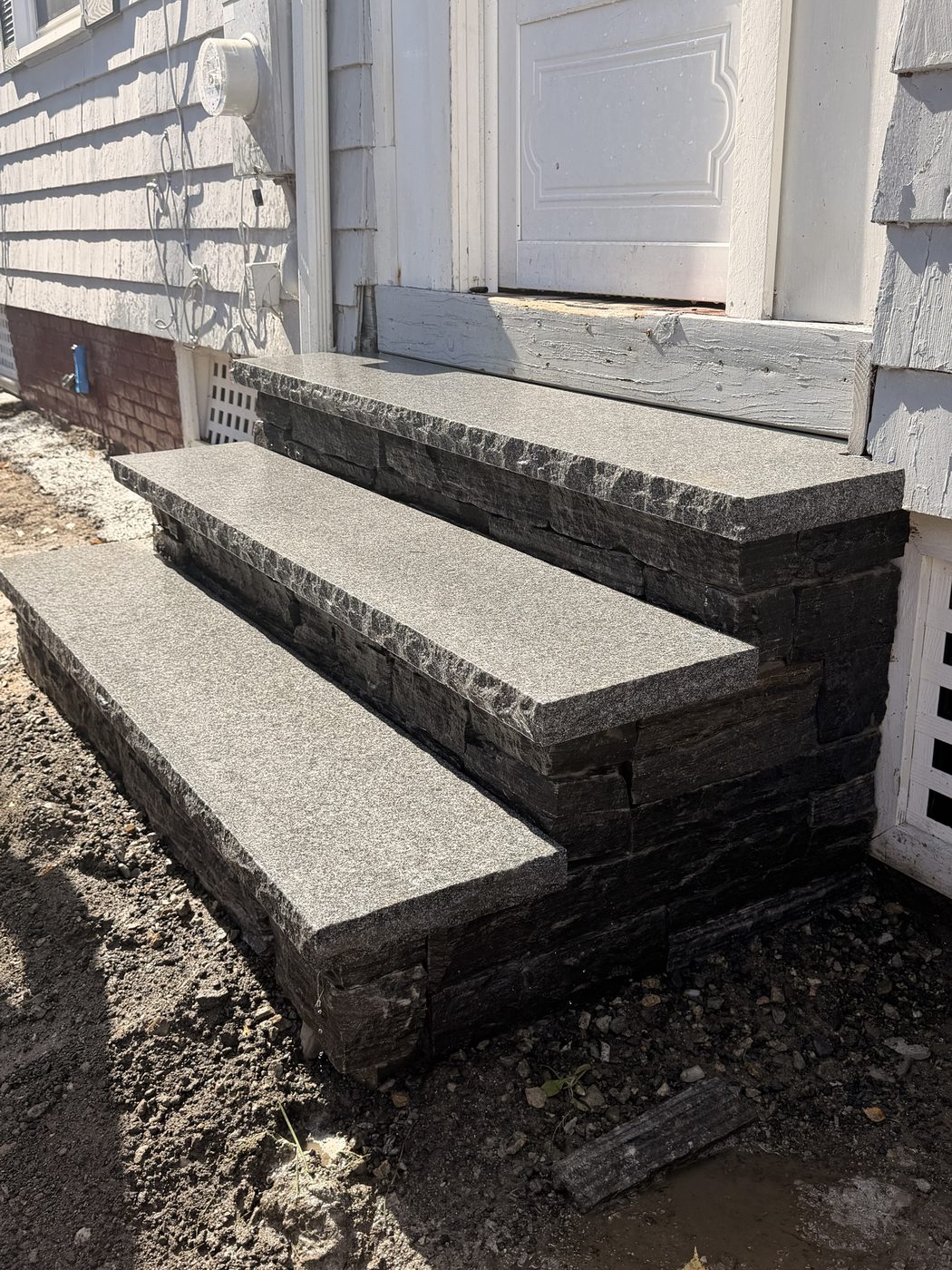
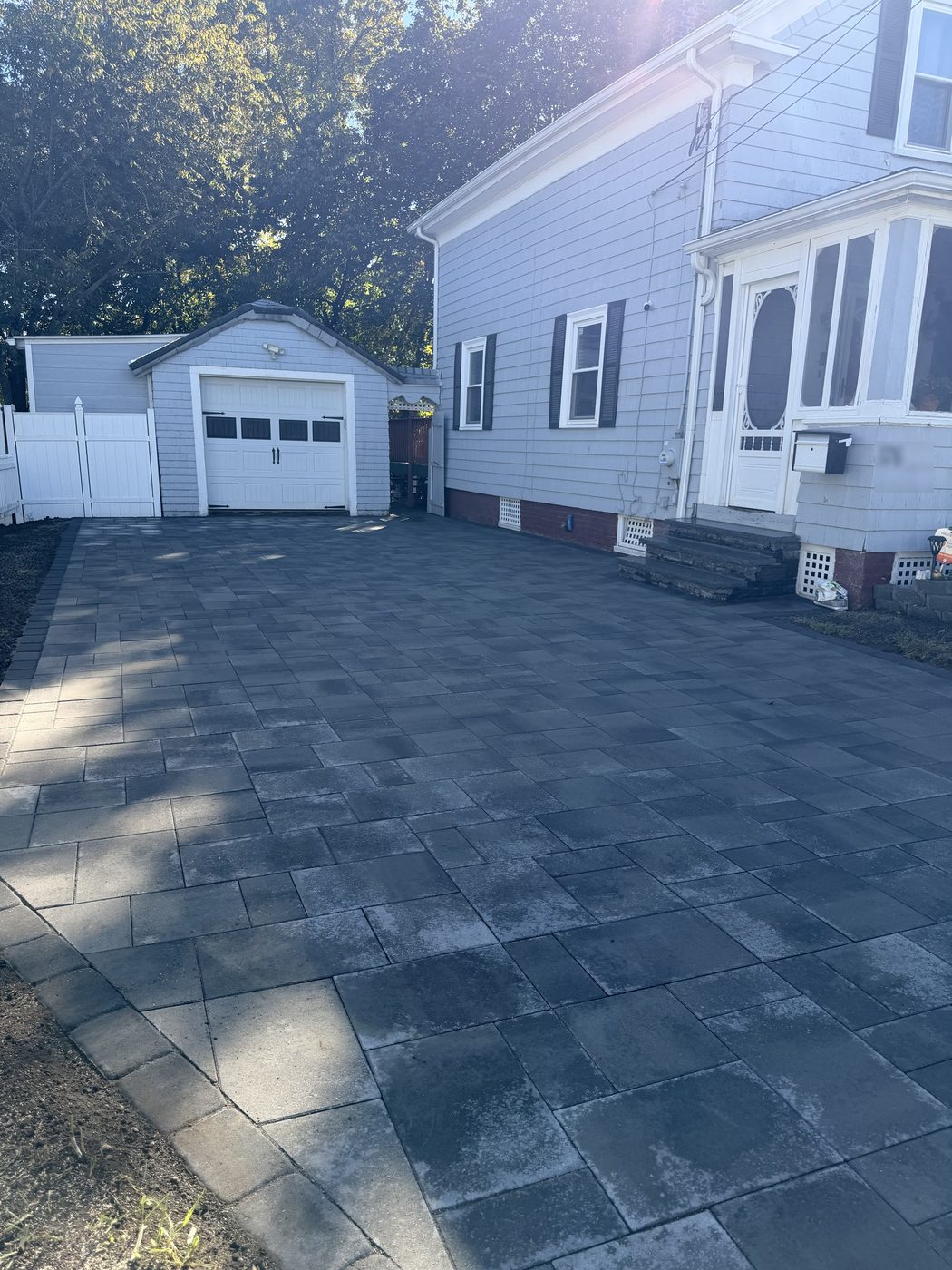
The poured stoop came out with the driveway, undercut where the ground had washed from beneath it. In its place: three granite treads, each a single piece with the rock face left on its edge, carried on courses of laid stone.

 BEFORE
AFTER
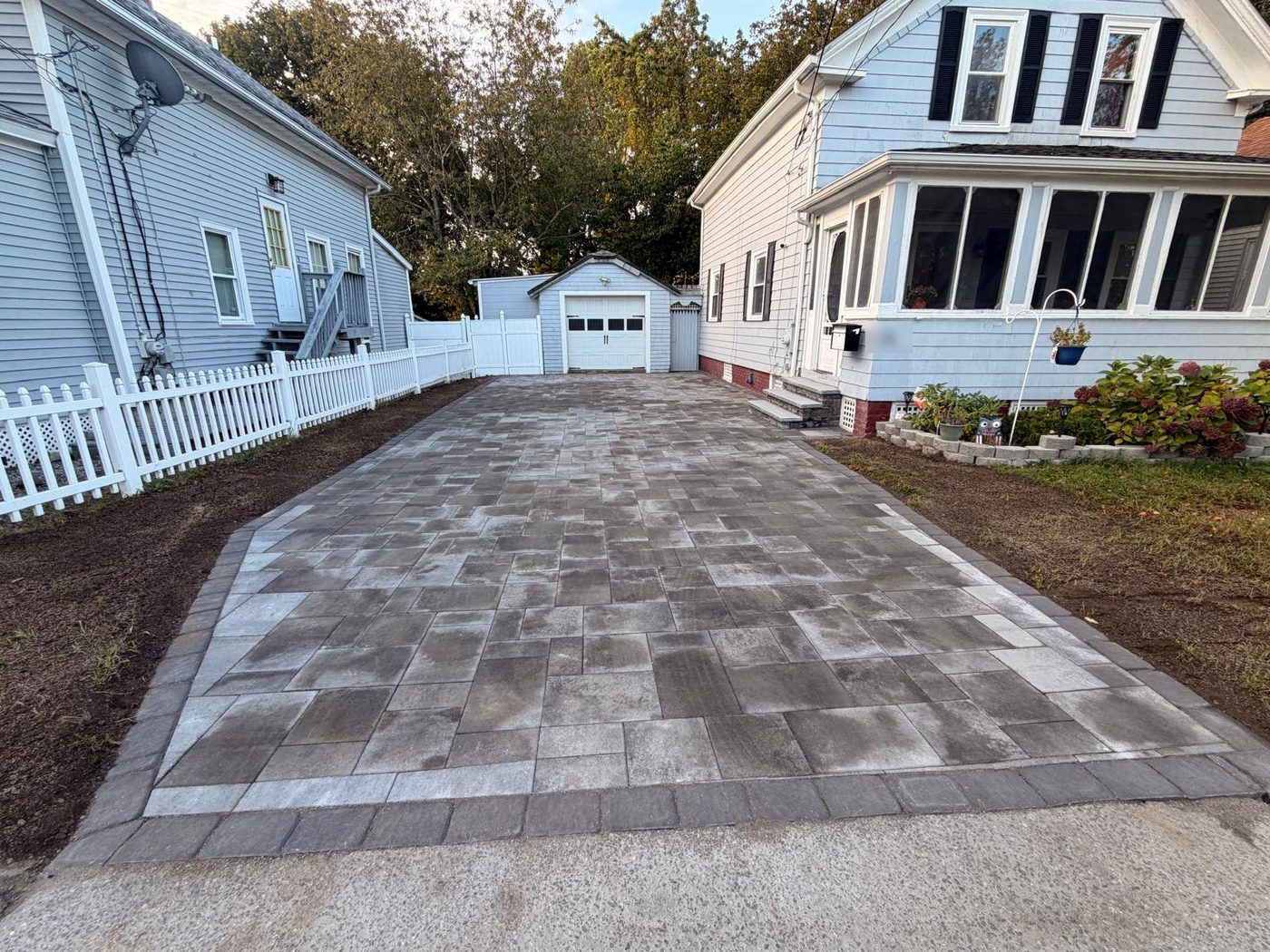
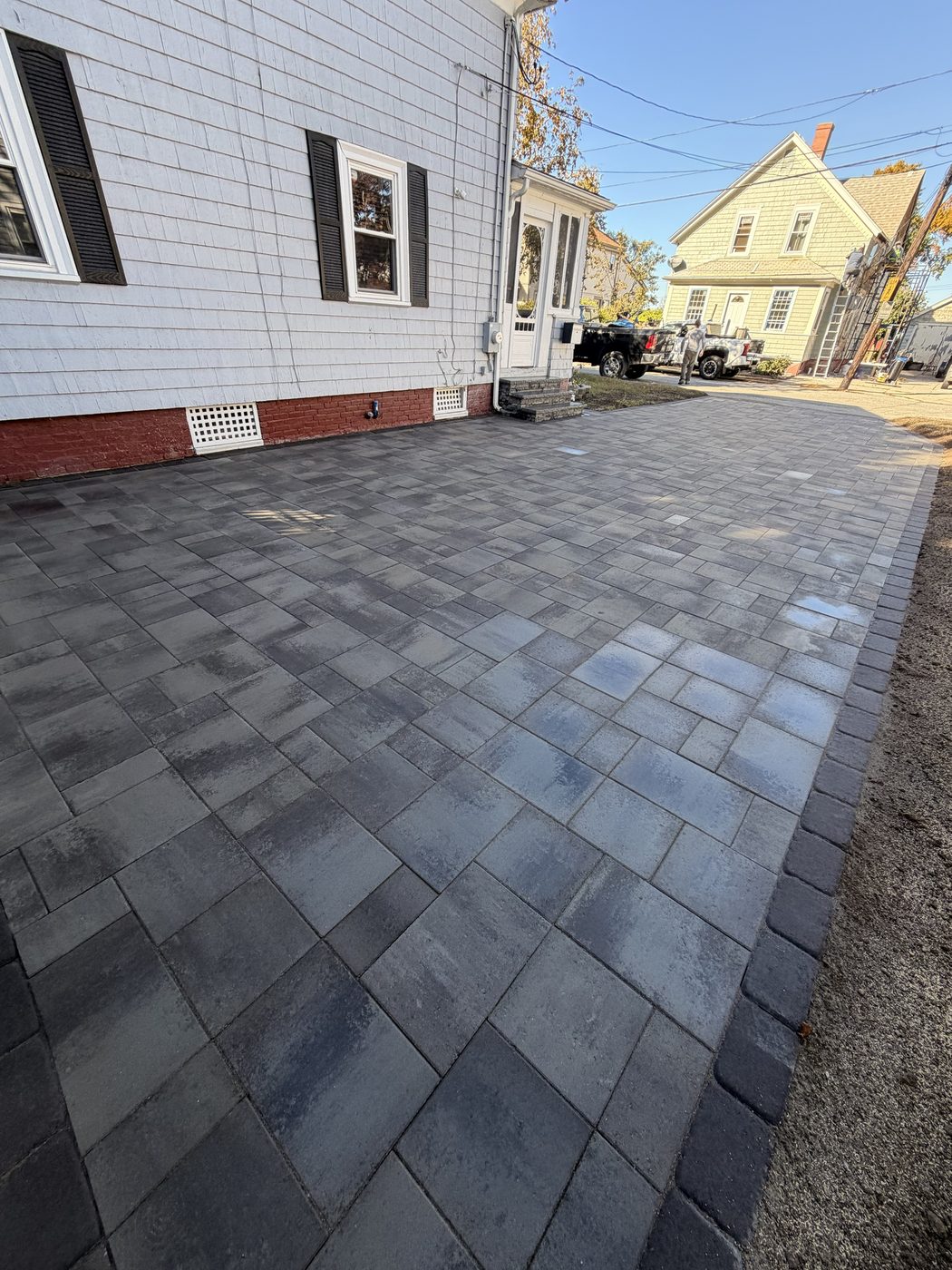
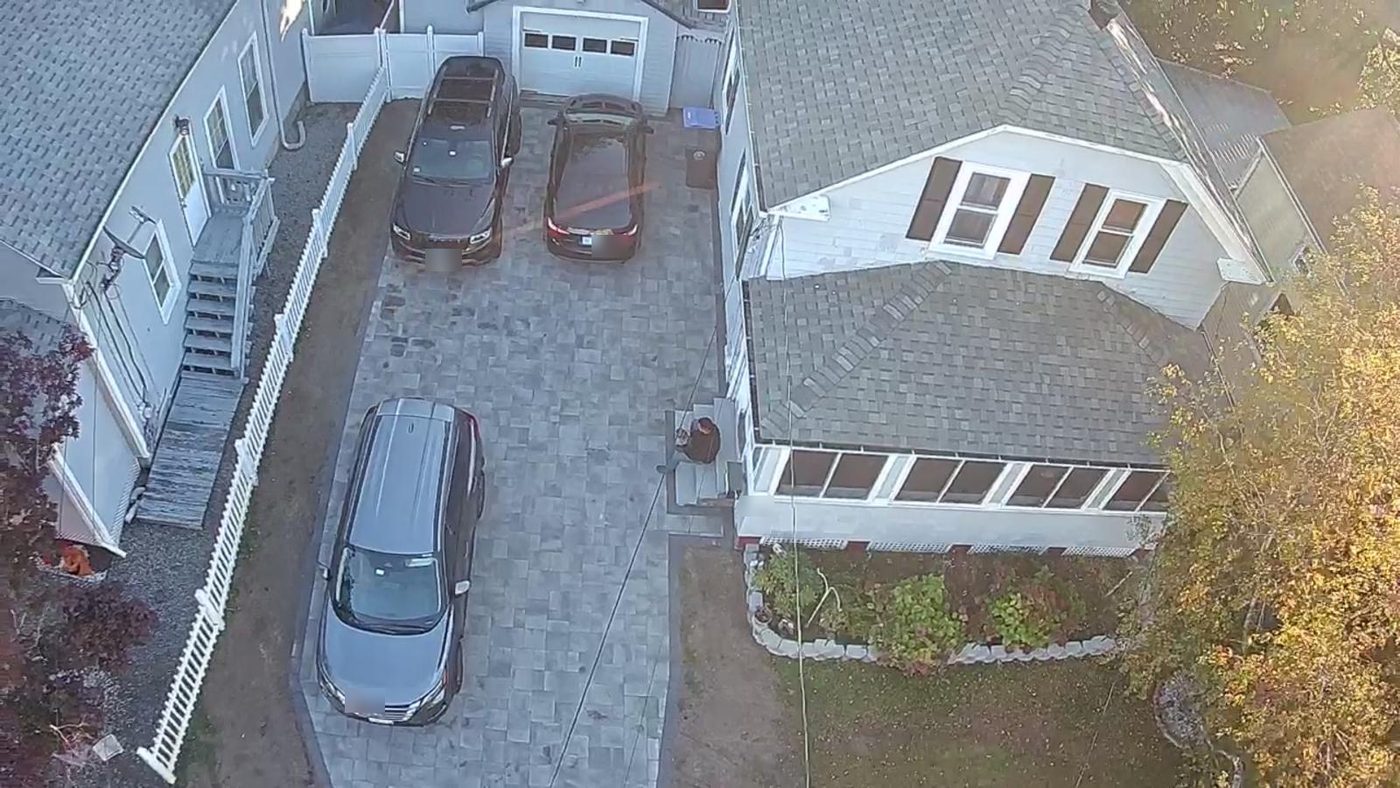
A darker border course runs the whole perimeter and squares off at the street, so the field has a clean edge on every side. Joints sanded, the beds beside it topsoiled, and the drive runs from the curb to the garage door in one surface.
Anyone can set the middle. The edge tells you who built it.
Price your project