The Sowinski Walk
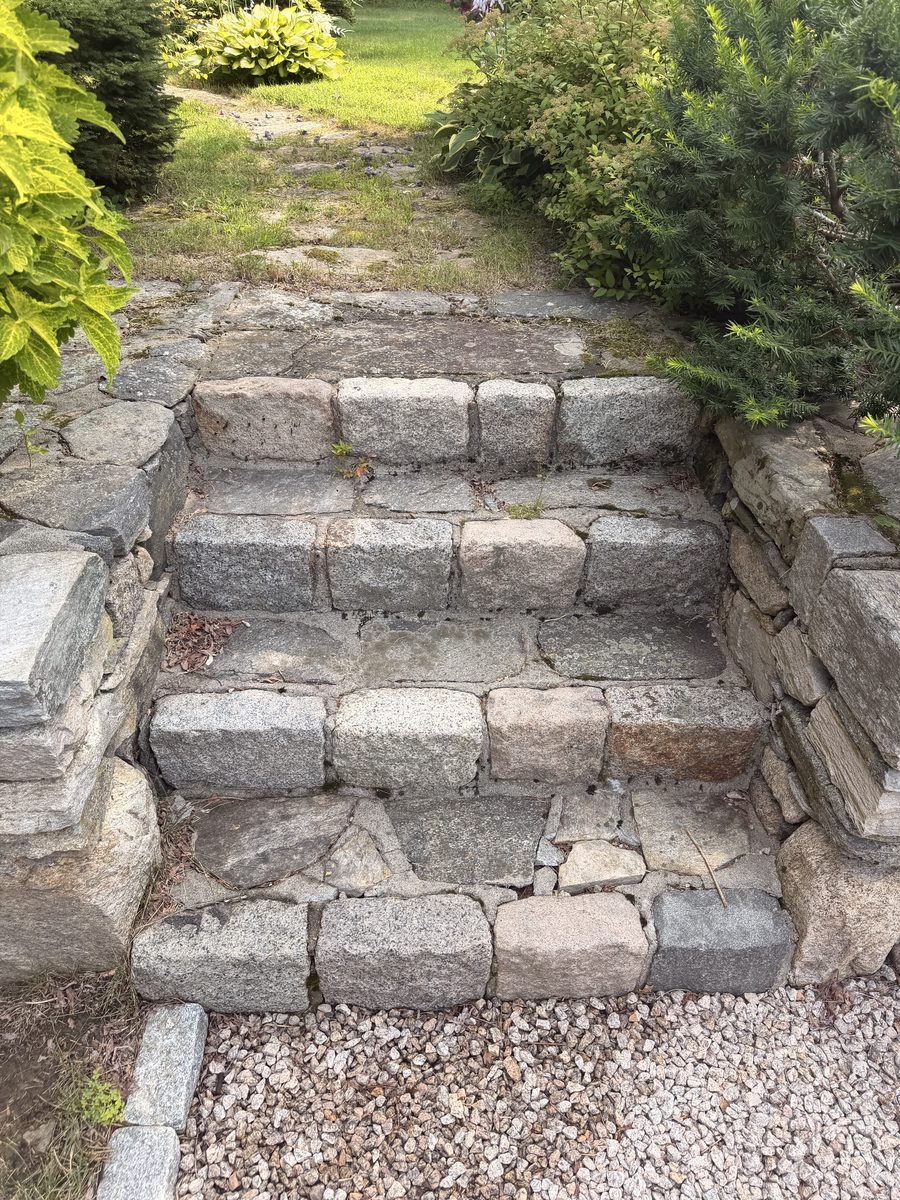
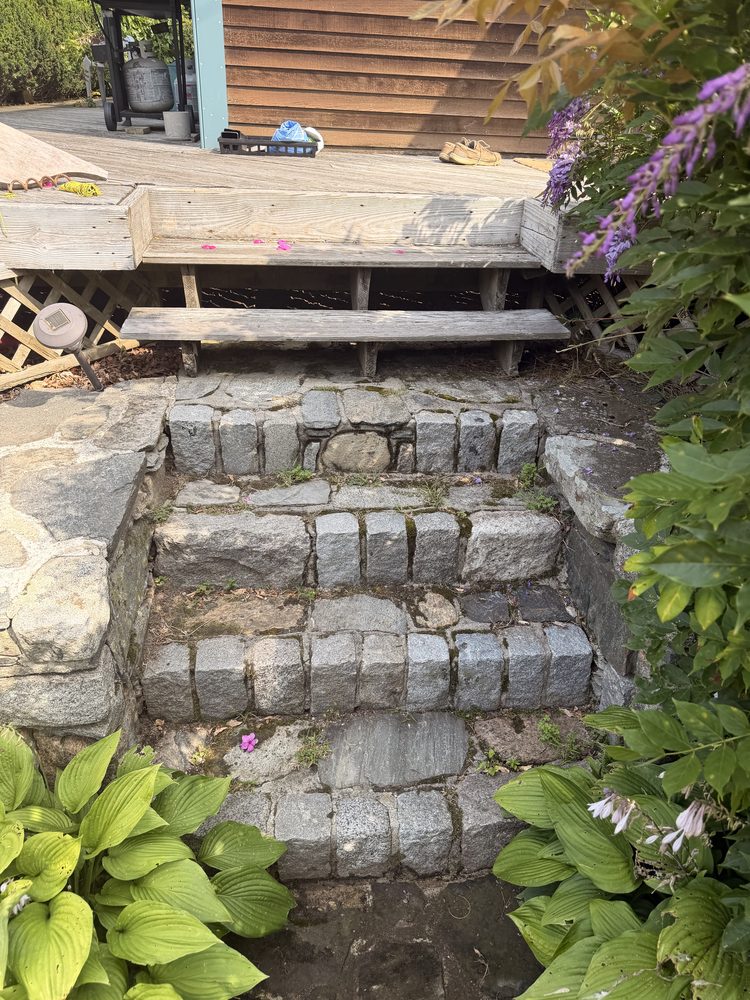
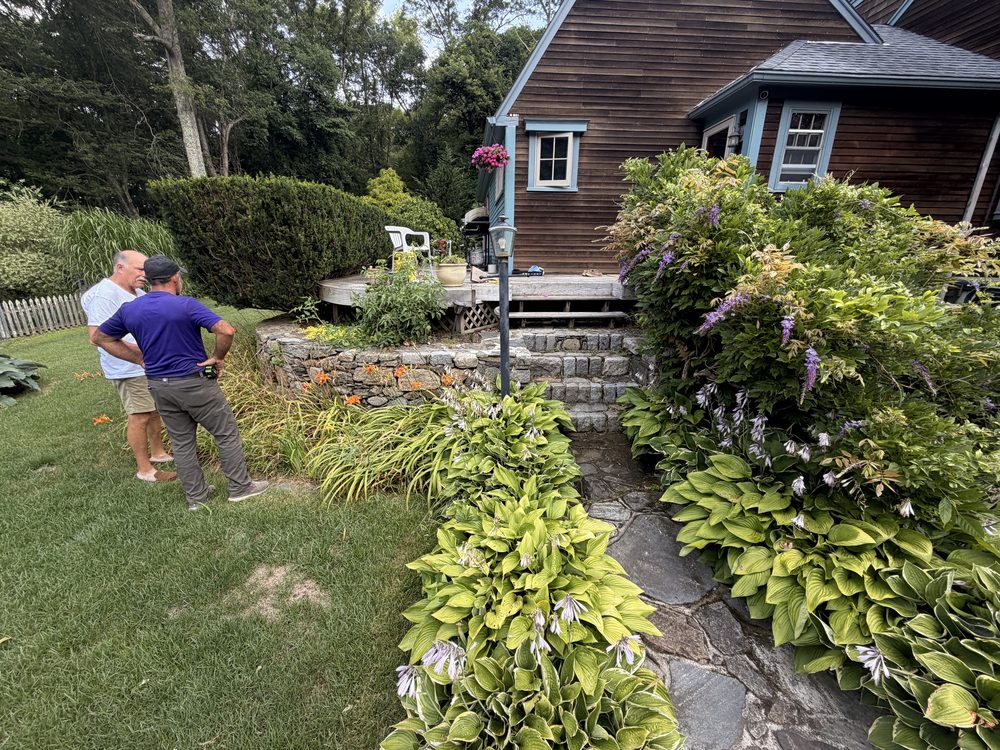
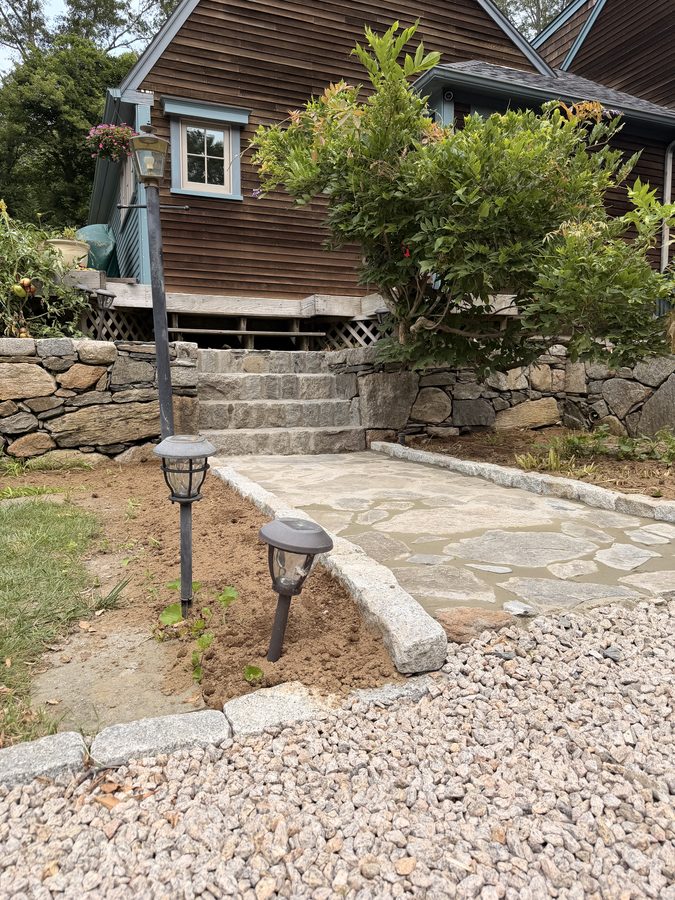
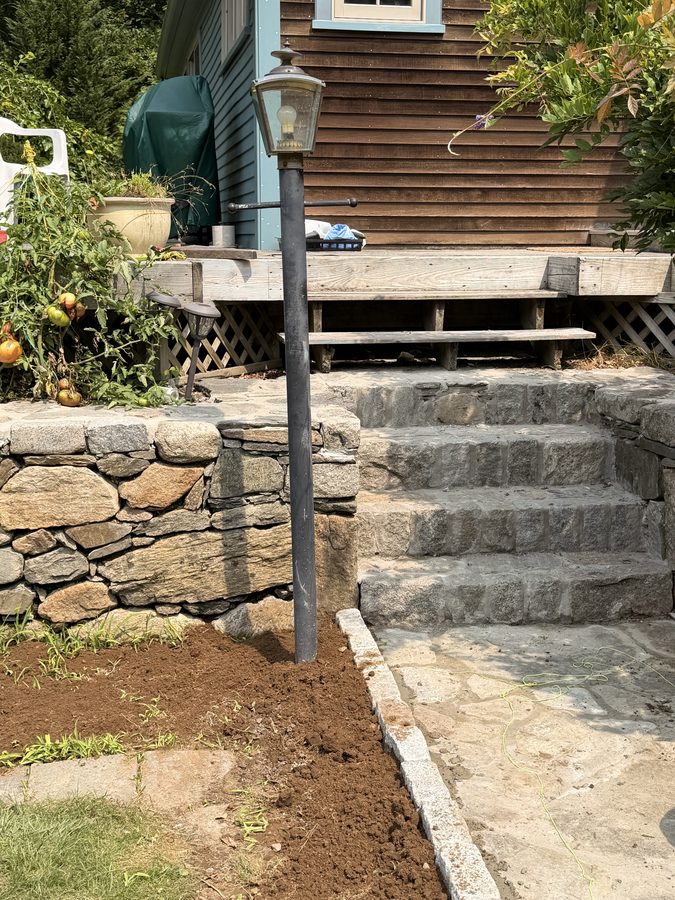
Small cobble steps sunk out of level, weeds through every joint, and a path you had to push the hostas aside to find. Drag the frame below to pull the old approach back over the new one.
- Completed
- August 2026
- Scope
- Walk, steps & walls
- Surface
- Irregular flagstone
- Edge
- Granite cobble
- Set
- Full mortar on concrete
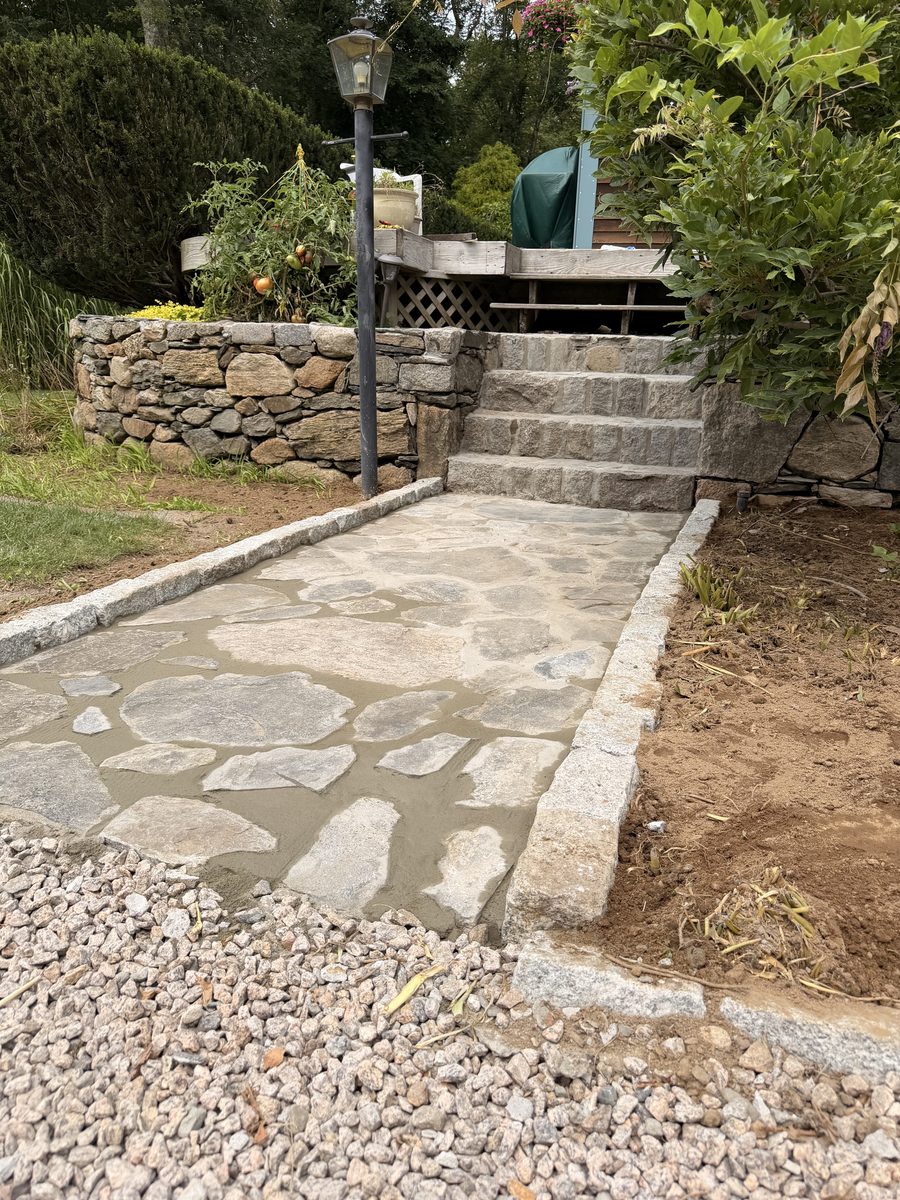
 BEFORE
AFTER
BEFORE
AFTER
Nothing here had failed outright. It had just been moving for years — steps settling at different rates, joints opening, the path narrowing every season as the beds grew into it. That's the point at which most people stop noticing, and start walking around it instead.
Concrete first, stone second
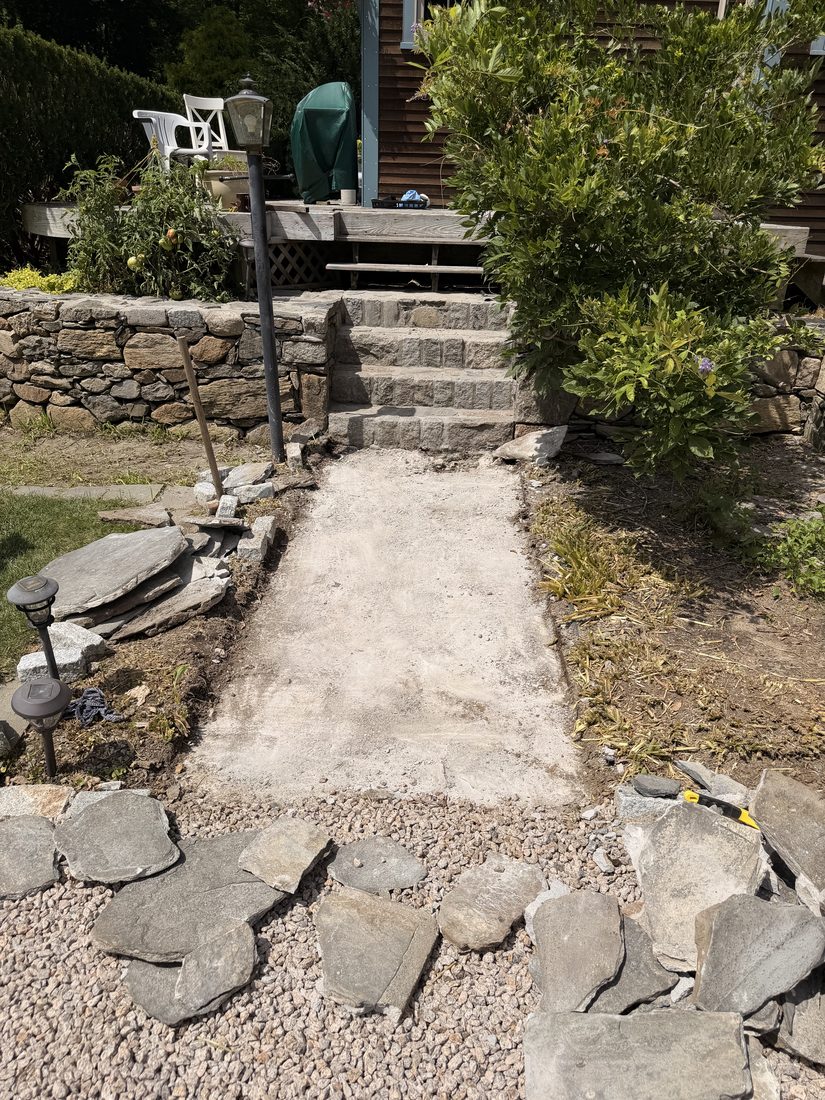
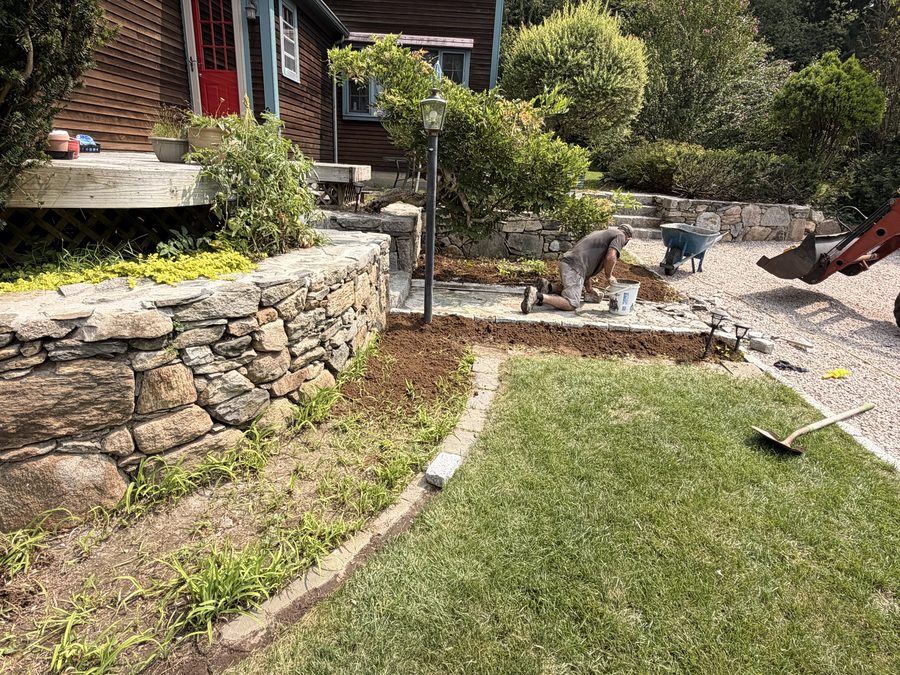
The old walk moved because there was nothing under it. This one starts with a poured, cured slab — and the flag gets sorted and staged around it before a single piece is committed.
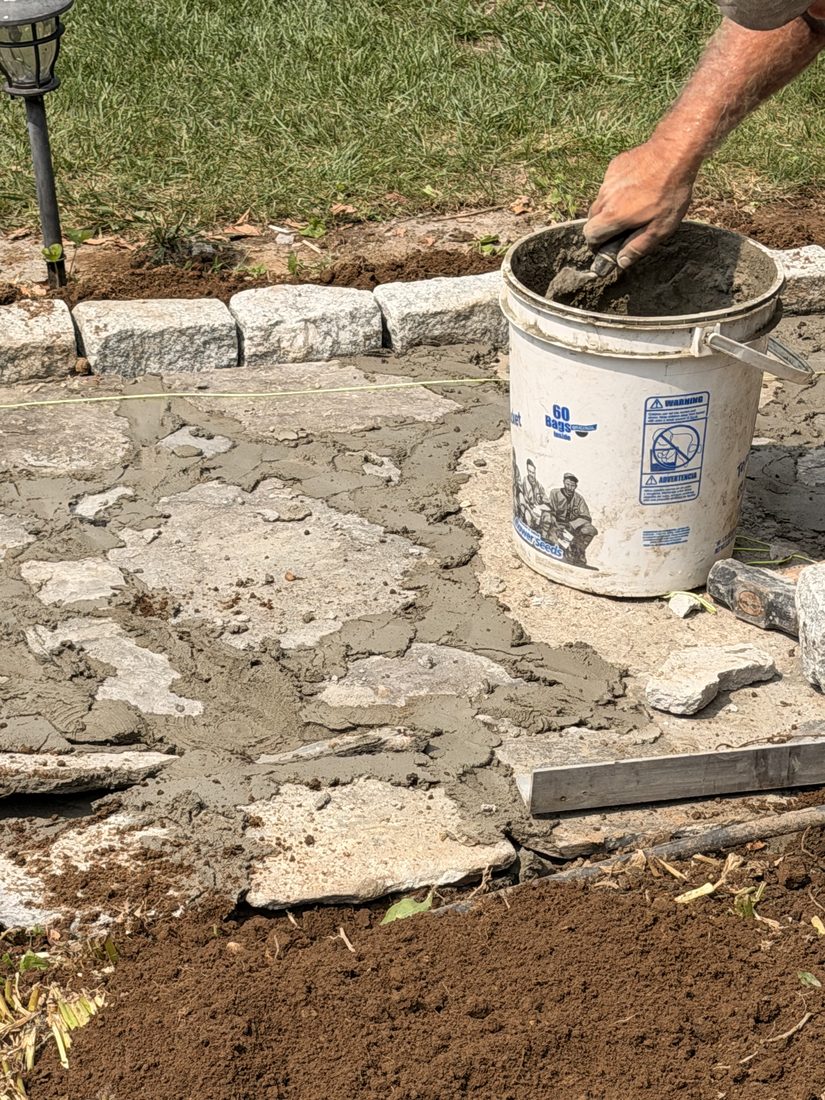
Full mortar, every stone
Each piece goes down in a full bed, not spotted on five dabs and levelled by eye. Nothing is floated on sand and hoped over — that's exactly what was taken out of here.
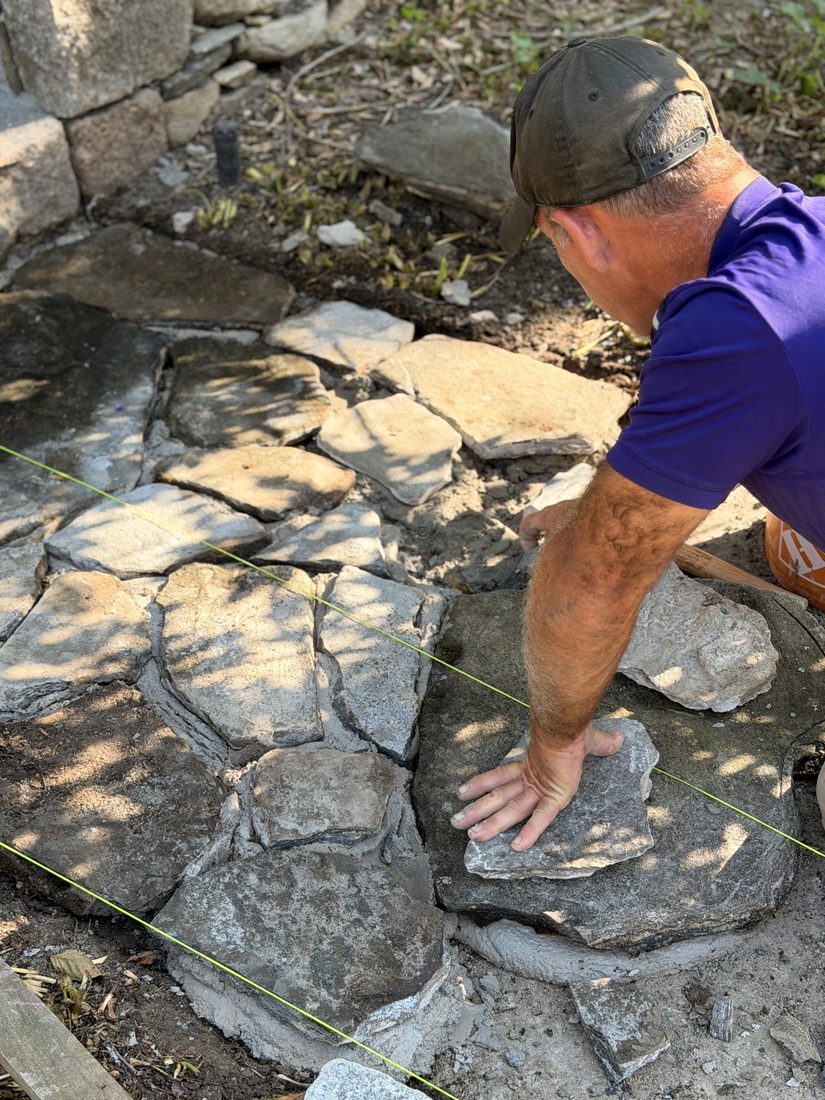
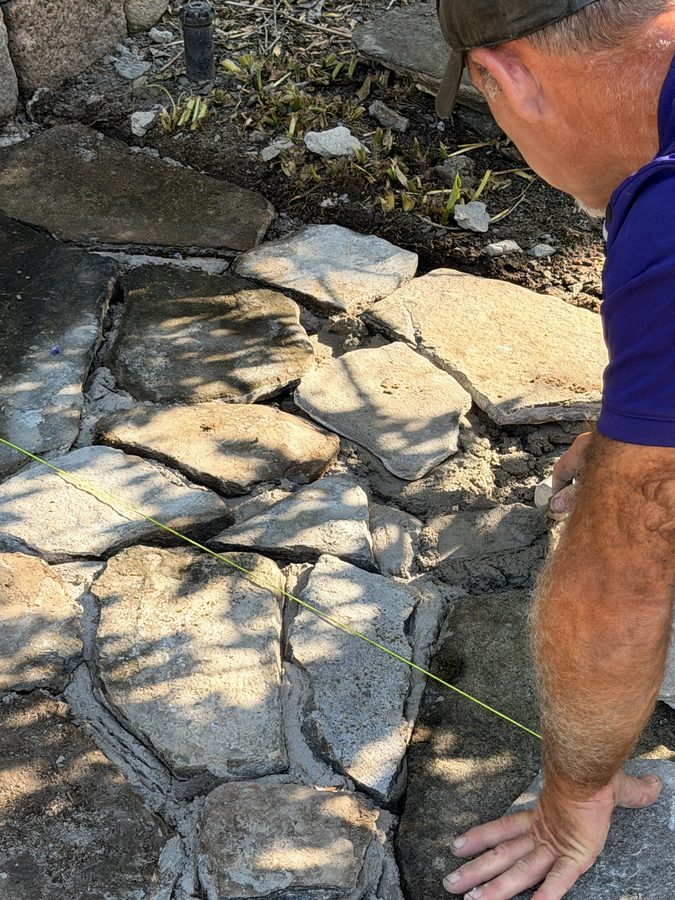
The string goes down first
Pulled before the first piece lands, and every stone after it checked against it. Height, pitch and run all come off that string. Get it wrong here and no amount of good stonework hides it.
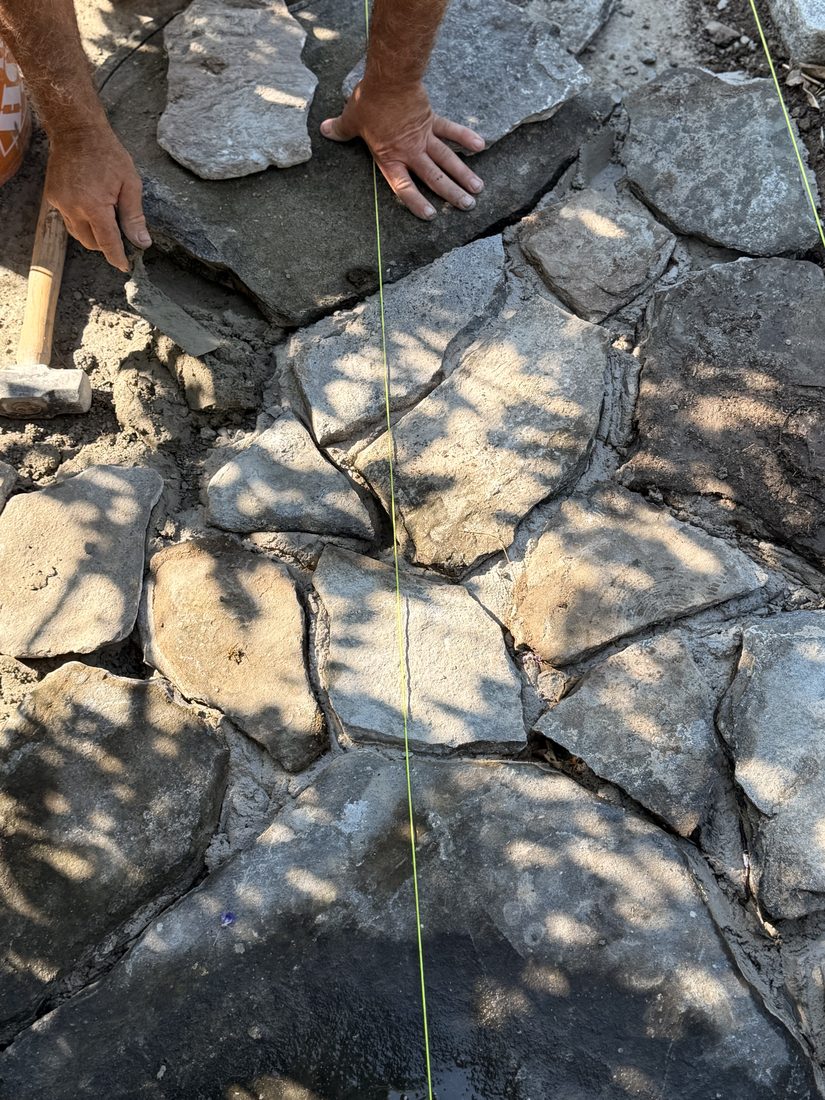
No pattern to fall back on
Irregular flag has no repeat. Each stone is picked and shaped to meet the ones already down, so the joints stay tight instead of turning into a field of mortar with rocks in it.
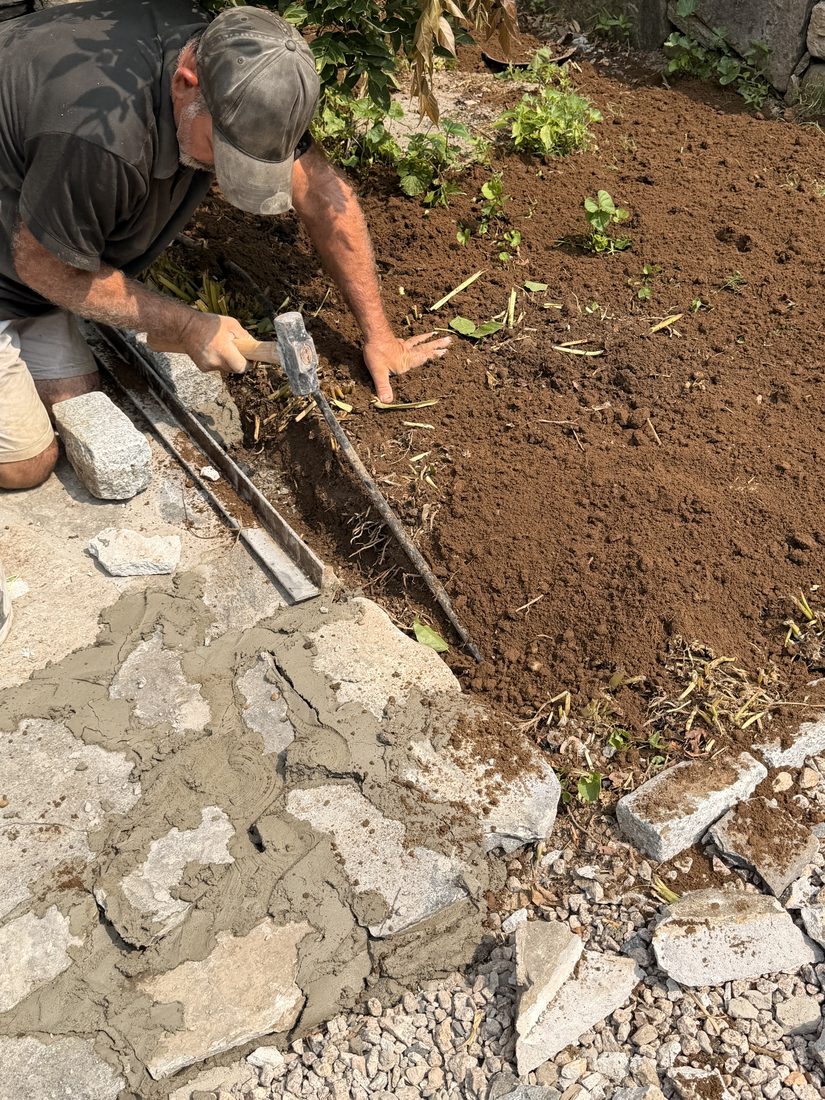
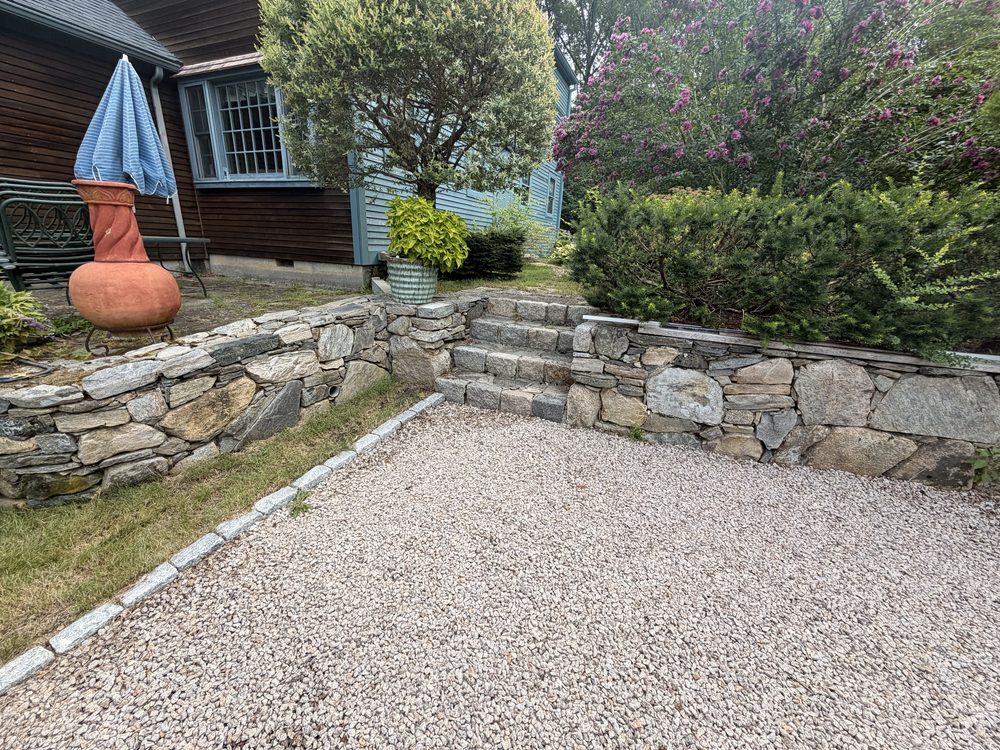
Cobble both sides, cut by hand
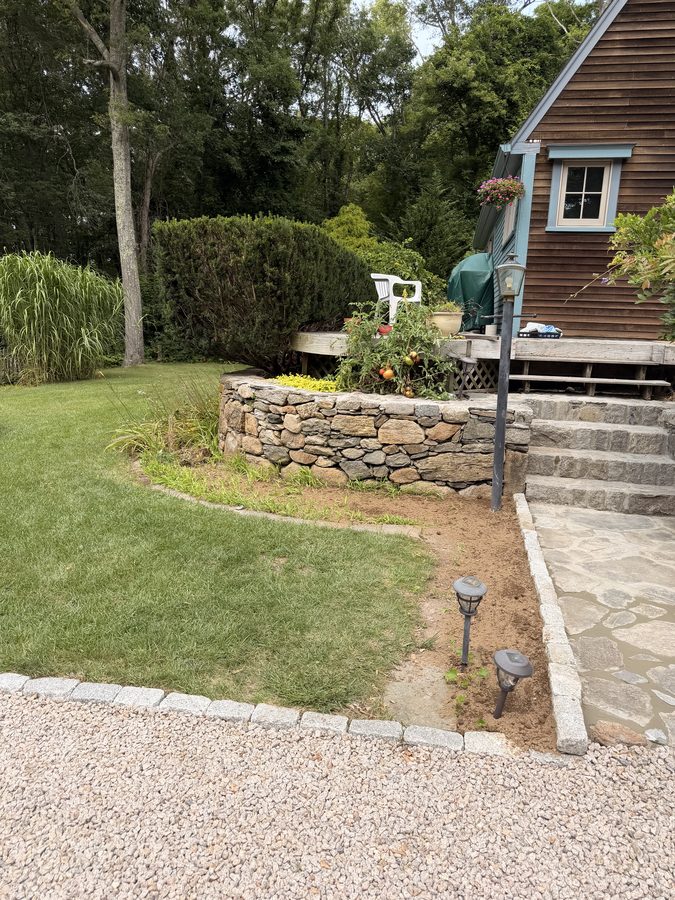
Granite cobble set down each side, then the bed cut back to it. That edge is the reason this walk won't disappear under the plantings the way the last one did.
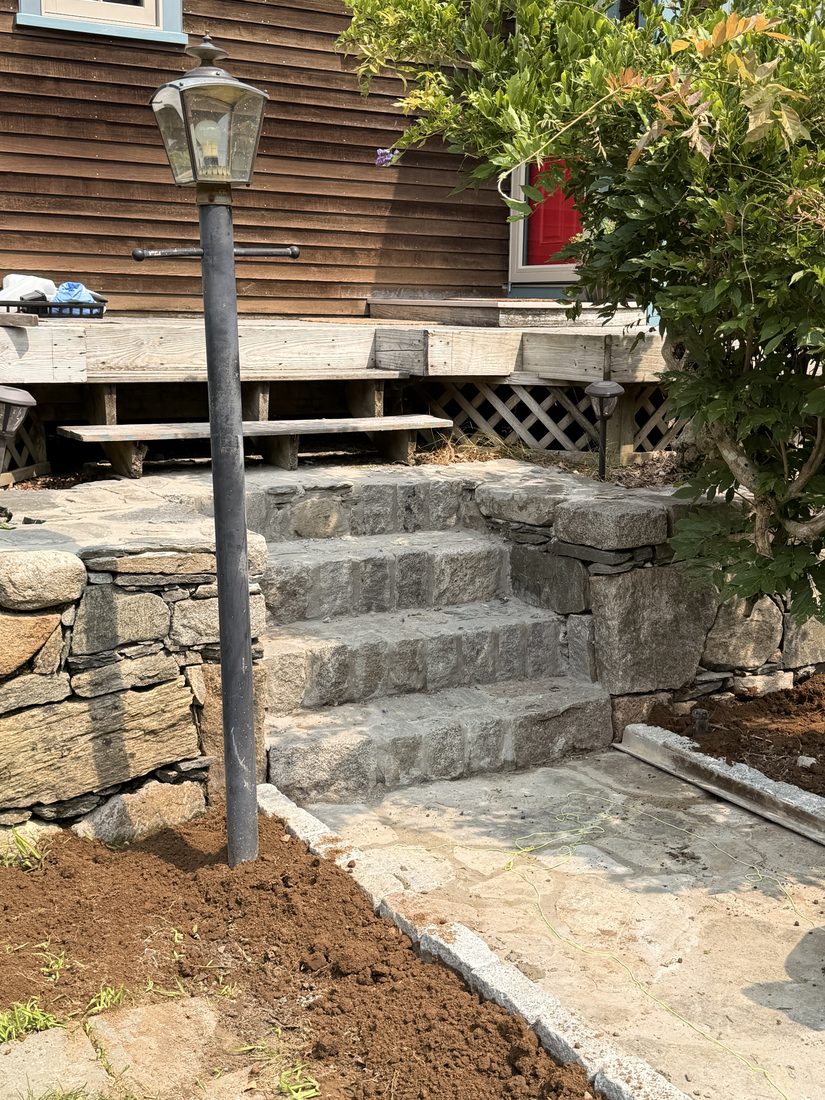
Full blocks, four risers
Solid granite instead of small cobbles stacked into a rise, carried on rebuilt wall either side. Every riser the same height, so nobody arriving at this house has to think about their feet.
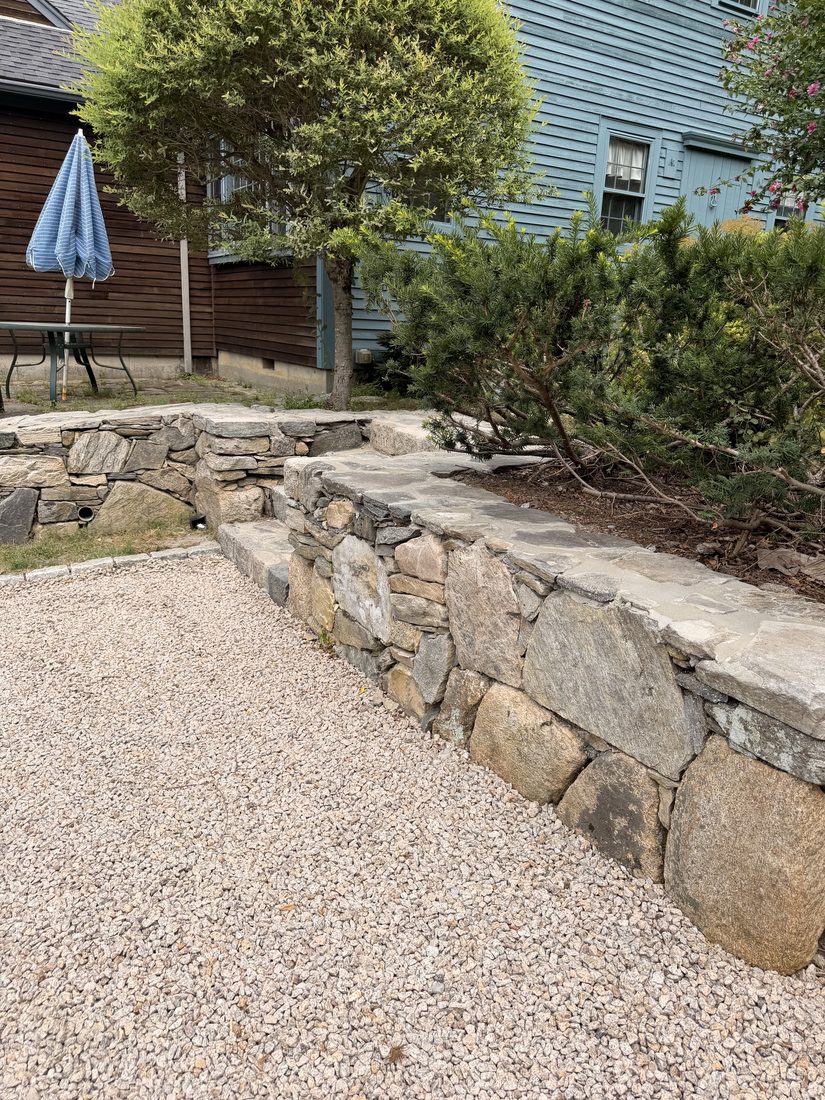
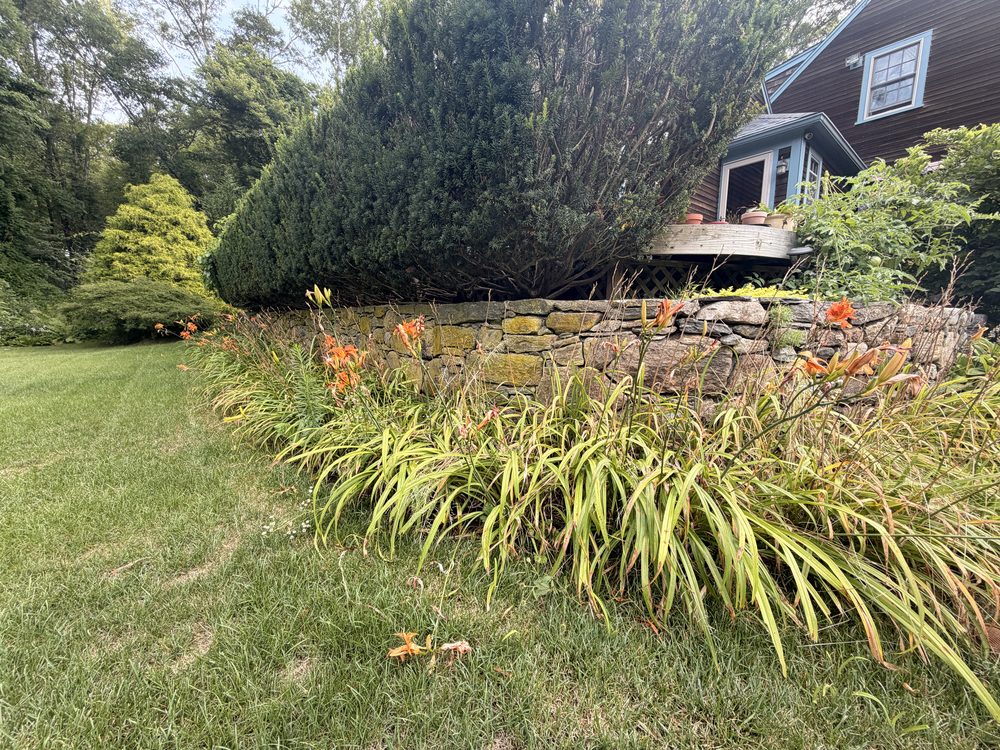
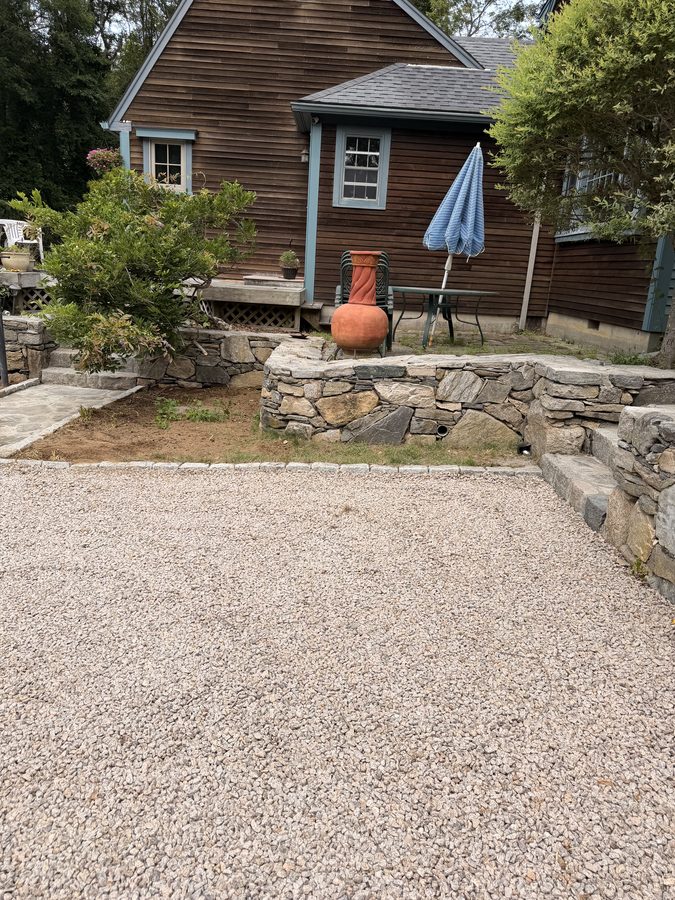
Along the drive. No mortar anywhere in it. It stands because each stone was chosen to lock the ones underneath, and it will still be standing when the mortared ones have let go.
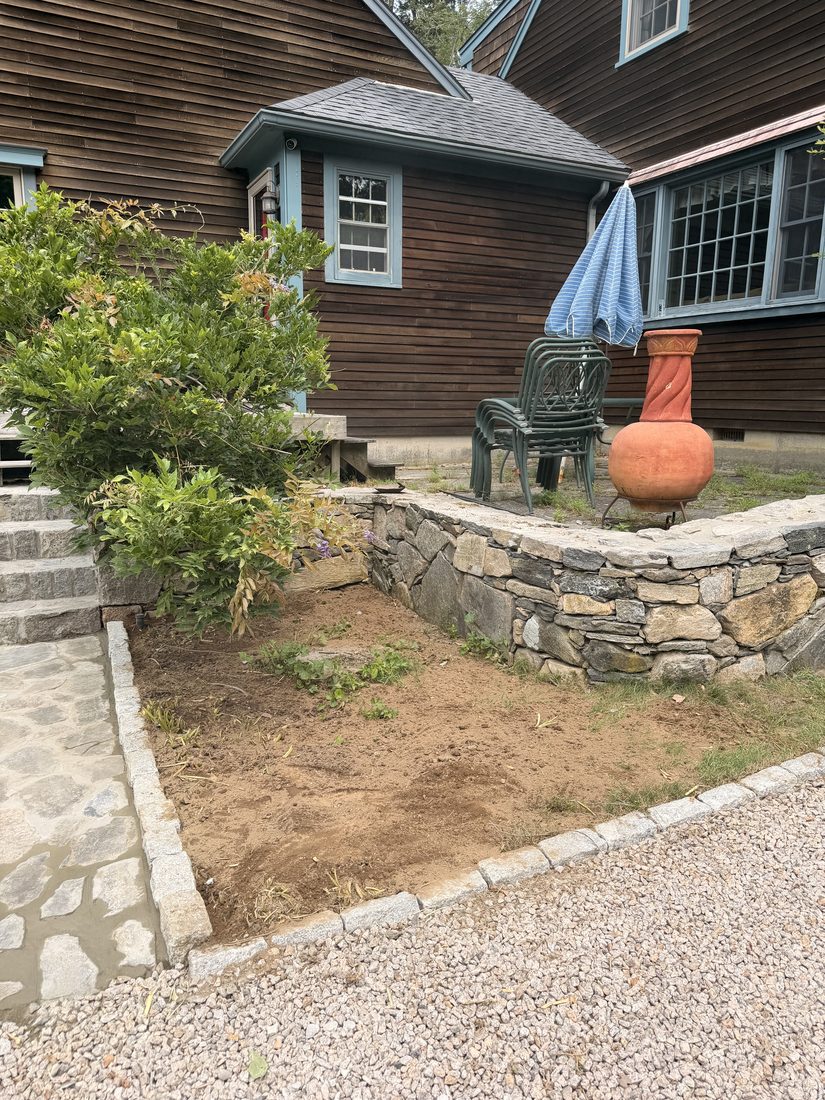
Around the terrace. Capped to shed water rather than hold it, then the ground brought back up to meet it so the wall reads as part of the yard instead of an object sitting in it.
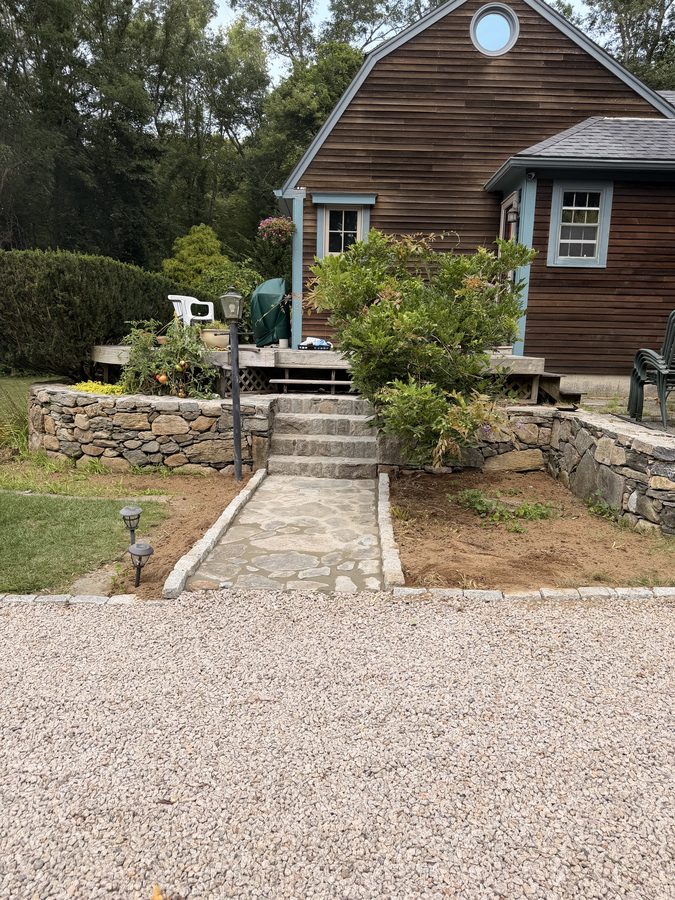
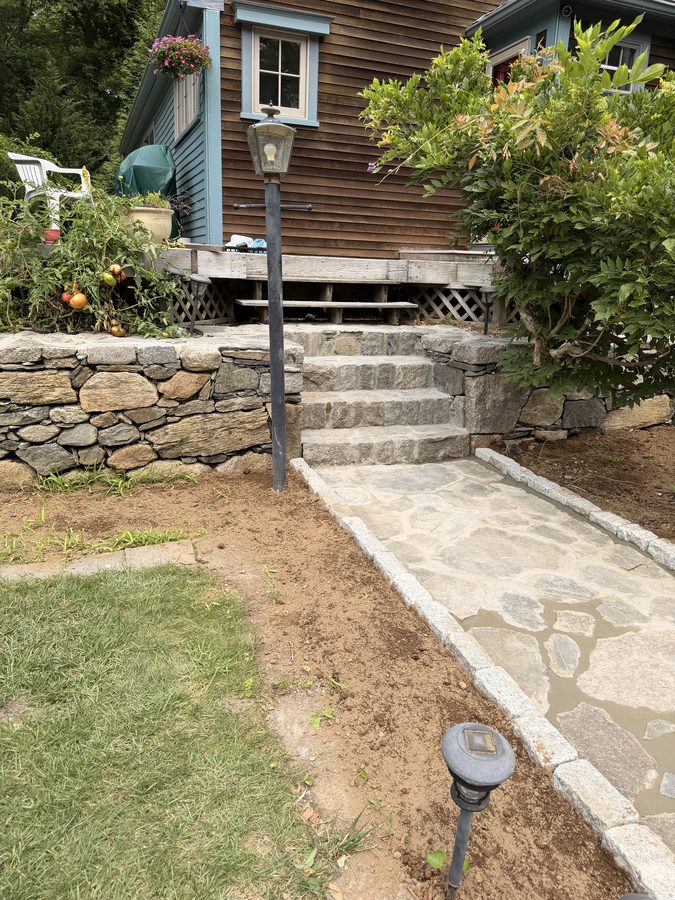
A walk is judged by the fifth winter, not the first week.
Get a free quoteLicensed & insured Massachusetts crews · our own people, not subcontracted out